Italian pasta is far more than a simple staple; it is a culinary language, with each shape telling a story of regional traditions, local ingredients, and ingenious design. The hundreds of pasta shapes found across Italy are not arbitrary, but rather a practical and cultural response to geography, climate, and available foodstuffs, each meticulously crafted to complement specific sauces and cooking methods. Understanding these regional origins and the functional design of pasta shapes allows you to confidently select and prepare authentic Italian dishes, ensuring that pasta and sauce work in harmony.
How History and Geography Shaped Pasta Shapes
The remarkable diversity of Italian pasta shapes stems from centuries of regional traditions, local ingredients, and distinct cooking methods, as explained by Alfredo Cooking Class. Italy's climate and agriculture historically dictated what ingredients were available, directly influencing pasta production. For instance, Northern Italy, where soft wheat flour (such as all-purpose or type 00) grows predominantly, traditionally features pasta often made with soft wheat flour and eggs, according to Eataly. This contrasts with Southern Italy, where durum wheat and water are more common, leading to robust, often extruded pasta forms.
The functional design of pasta shapes also played a crucial role in their development. Many shapes were created with a practical purpose in mind, such as a twist to trap sauce or ridges to hold it tight, notes Alfredo Cooking Class. This intentional design ensures that each pasta shape performs a specific job, optimizing sauce adherence and overall texture in a dish. As Eleonora Baldwin writes for Casa Mia Tours, these unique shapes are not random; their size, texture, and form are designed to enhance specific recipes and local ingredients.Northern Italy: Egg-Rich Ribbons and Hearty Forms
Northern Italian pasta often reflects the region's agricultural bounty, particularly its soft wheat and dairy. These pastas are frequently made with eggs and soft wheat flour, resulting in tender, often broad, and flat shapes.
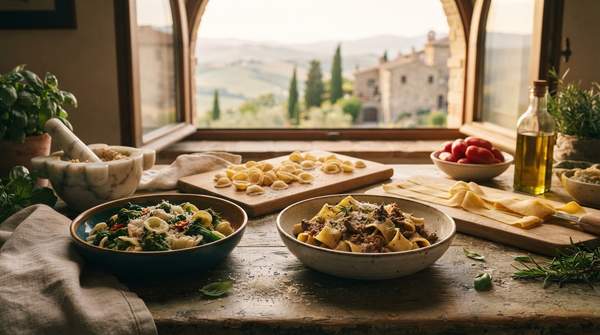
One iconic example is Pappardelle, a broad, flat, ribbon-like pasta commonly associated with Tuscan cuisine, as noted by Alfredo Cooking Class and Bell Italia. These wide ribbons are well-suited for the colder northern climate and are traditionally paired with rich, hearty meat sauces like ragù, according to Mama Mia's Strattoria. The substantial surface area of pappardelle allows it to effectively hold and deliver these robust, weighty sauces.