Every coffee bean begins its life wrapped in fruit, and what happens to that fruit after harvest is one of the biggest reasons two coffees from the same farm can taste completely different. The four processing methods you'll see on specialty coffee labels—washed, natural, honey, and anaerobic—differ mainly in how much of the cherry's sticky, sugar-rich mucilage stays in contact with the bean, and how much oxygen the fermentation is exposed to. More mucilage generally means more sweetness and body; a controlled, oxygen-free environment pushes flavors toward the exotic. Learn the pattern, and the label on the bag becomes a reliable first clue about what's in your cup.
The Science Behind the Flavor: How Fermentation Works
Is coffee fermented? Almost always, yes. As Royal Coffee's Chris Kornman explains, coffee fruits begin fermenting immediately after harvest, before any further processing or export, and the two traditional categories—washed and natural—ferment in different ways that produce different flavors. That fermentation is not a accident to be tolerated; it is a lever producers can pull deliberately.
A peer-reviewed study on the Coffea arabica Catiguá MG2 variety, published in 2024, describes fermentation as a critical post-harvest process that can be strategically manipulated to augment coffee quality. The mechanism is microbial: bacteria and yeasts consume sugars in the cherry's mucilage and generate metabolites that are instrumental in forming distinct sensory profiles. In other words, the flavor compounds in your cup are, in part, the waste products of tiny organisms feasting on fruit sugar.
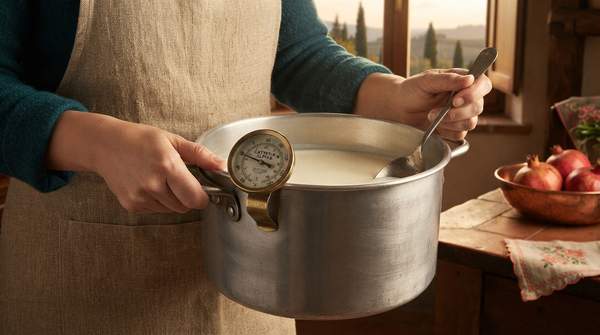
Temperature and oxygen are the two dials on this machine. The same study notes that for coffee fermentation, the ideal range is typically between 25 °C and 30 °C, where fermenting bacteria and yeasts are most active—and that temperature swings, such as water warming by day and cooling at night in submerged natural processing, can prevent the constant conditions that favor predictable results. Producers running anaerobic ferments must also control pressure and pH, according to fermentation specialists quoted by Perfect Daily Grind, and in theory, longer fermentation times allow more aromatic and volatile compounds to be absorbed by the green coffee.
One caution belongs up front: as Achilles Coffee Roasters notes, processing research has found measurable differences in volatile and bioactive compounds among washed, natural, honey, anaerobic, and carbonic-maceration coffees, but origin, roast, and experimental design complicate broad conclusions. Sensory outcomes cannot be predicted solely from the name of the fermentation method. Processing is a strong signal, not a guarantee.
Washed Process: Clean, Bright, and Consistent
The washed process is the most popular method for high-quality specialty coffee worldwide, according to JA Coffee's Saro Hartounian. It starts with a depulping machine that strips the outer fruit from the cherry, after which farmers soak the depulped beans in water for several hours to remove any remaining flesh and mucilage, as Rachel Keen explains at Perfect Daily Grind. Almost nothing sugary is left touching the bean as it dries.
The sensory consequence is clarity. With the fruit's sugars largely gone before drying, washed coffees typically taste cleaner and brighter, with the coffee's acidity highlighted rather than muted by fruit-driven sweetness. The typical flavor notes associated with this clarity are floral, citrus, and tea-like, and the body tends to be lighter than in fruit-contact methods. For a buyer, "washed" on a label is a reasonable shorthand for a transparent, structured cup where origin character shows through with minimal interference.
Natural Process: Bold, Fruity, and Full-Bodied
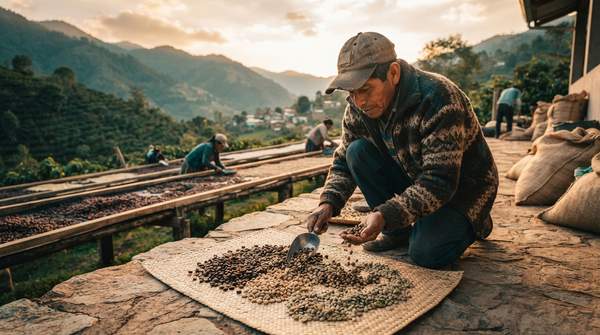
The natural process is the oldest approach and the mirror image of washed: whole cherries are dried with the fruit entirely intact, whether on raised beds or patios, so all of the pulp and mucilage remain in contact with the bean throughout drying. As the fruit dries around the seed, its sugars and the ongoing microbial activity leave a much heavier imprint on the bean.
The result is the richest and most fruit-forward of the traditional profiles. Natural coffees are prized for bold, fruity intensity and a heavier, syrupy body, with sweetness that washed processing rarely matches—the "richness of a Natural" in Hartounian's phrasing. The trade-off is risk: because the fruit stays on the bean for so long, drying must be managed carefully, and the same fruit contact that creates intensity can introduce defects when things go wrong. When you see "natural" on a bag, expect a big, sweet, jammy cup rather than a delicate one.
Honey Process: A Balance of Sweetness and Complexity
Honey processing sits deliberately between the two poles. The producer depulps the cherry as in washed processing, but instead of washing away all the mucilage, leaves a portion of it clinging to the bean during drying. (Despite the name, no honey is involved—the term refers to the sticky texture of the residue.) The more mucilage left on, the more sugar-driven character the bean picks up, which is why producers grade honey lots by color, from lighter to darker, reflecting how much fruit was retained.
In the cup, honey processing aims at the middle ground: the balanced sweetness that Hartounian highlights as the method's signature, with more body and fruit than a washed coffee but more clarity and less ferment-driven intensity than a natural. It is often described as the most food-pairing-friendly profile—sweet enough to please, clean enough to stay interesting. If you want one foot in each camp, honey is the method to look for.
Anaerobic Fermentation: Experimental and Exotic
Anaerobic fermentation is the newest entry on the label, and it changes the environment rather than the amount of fruit. Cherries—or depulped beans—are sealed in oxygen-free tanks, and as Hartounian describes, this emerging method intensifies tropical, spicy, and even funky flavor notes. A related winemaking technique, carbonic maceration, ferments whole cherries in a carbon-dioxide-rich environment to similar experimental effect; both push the boundaries of conventional coffee flavor.
The science explains why the results feel so distinct. Sealing the tank changes which microorganisms dominate the fermentation, and producers must actively manage temperature, pressure, and pH to keep the process on target. The payoff is a cup that can taste unlike any traditional category—often vividly fruity, sometimes wine-like or savory. The risk mirrors the reward: these are the least predictable coffees on the shelf, and the same intensity that delights one drinker can read as "funky" to another. Treat anaerobic lots as an adventure purchase, not a daily default.
Comparative Guide to Coffee Fermentation Methods
The table below compares the four methods across the variables that matter—process steps, mucilage retention, fermentation environment, and the sensory outcomes they typically produce—so you can trace the cause-and-effect from technique to taste.
| Method | Key Process Steps | Mucilage Level | Fermentation Environment | Typical Acidity | Body & Sweetness | Common Flavor Notes |
|---|---|---|---|---|---|---|
| Washed | Cherry depulped, then soaked in water to remove remaining flesh before drying | Almost all removed | Underwater, typically hours; duration varies | Bright, clean, pronounced | Lighter body; less sweetness | Clean, floral, citrus, tea-like |
| Natural | Whole cherries dried intact on raised beds or patios | All pulp and mucilage remain on the bean | Native microbes act on the fruit as it dries | Lower, softer | Heavy body; intense sweetness | Bold, fruity, jammy, rich |
| Honey | Cherry depulped, but some mucilage left on the bean during drying | Partial retention, graded by color | Open-air drying with fruit residue present | Moderate | Medium body; balanced sweetness | Sweet, complex, between washed and natural |
| Anaerobic | Cherries or beans sealed in oxygen-free tanks to ferment | Varies with the base method chosen | Sealed, oxygen-free; temperature, pressure, and pH controlled | Variable, often vivid | Often intense and distinctive | Tropical, spicy, funky, sometimes wine-like |
Read the table as a gradient: mucilage retention runs from none (washed) to partial (honey) to full (natural), and sweetness and body broadly rise along that same line. Anaerobic sits on a separate axis entirely—oxygen control—which is why its flavors can feel categorically different rather than just stronger or weaker.
Choosing Your Brew: Matching Processing to Your Palate
Readers can select coffee beans based on their preferred flavor profiles by understanding the processing method: if you want clarity, brightness, and a lighter cup, reach for washed; for bold fruit and heavy sweetness, choose natural; for a balanced middle ground, honey; and for something experimental and intense, anaerobic. Remember the boundary—origin, variety, and roast level are also major factors, so processing predicts a tendency, not a certainty, and drying quality matters as much as fermentation itself.
The measurable indicator is right on the packaging: a coffee bag label indicating the processing method, such as "Washed", "Natural", "Honey", or "Anaerobic". Next time you shop, find that word, recall the profile it typically signals, and buy one coffee from a different method than your usual—then taste them side by side. The difference in acidity, sweetness, and body between a washed and a natural lot from the same origin is the clearest proof of the pattern you've just learned.
Sources
- Understanding Coffee Fermentation From Classic To Experimental — Royal Coffee
- Enhancing Sensory Quality of Coffee: The Impact of Fermentation Techniques on Coffea arabica cv. Catiguá MG2 - PMC
- Coffee Processing Methods — Achillescoffeeroasters
- Coffee Processing Methods Explained: Washed, Honey, & Natural — JA Coffee