The best Italian cooking class for you isn't the one with the most beautiful photographs—it's the one whose menu, group size, and level of participation match what you actually want from a day in a kitchen. Travel writer Beth Graham, who counts a class on Capri among her most memorable food experiences in Italy, says that experience taught her to look past the images and check three things: the menu, the group size, and the amount of hands-on participation. This guide turns those instincts into a structured framework, so you can filter any listing—Florence city kitchen or Puglian farmhouse—against your own preferences before you book.
The Decision Framework: Key Questions for Your Ideal Class
Before you scroll through listings, answer four sets of questions for yourself. First, cuisine focus: do you want a broad introduction to Italian home cooking, or do you want to go deep on one region's specialties? Second, experience type: do you want flour on your hands, or would you rather watch a chef demonstrate and then eat? Third, logistics: does the class begin at a local market, where you shop for ingredients with the chef, or does everything start in the kitchen? Fourth, environment: a small group in a city apartment, or a private setting in the countryside?
Towns of Italy's editorial team frames the Florence and Tuscany choice in exactly these terms: "Market Class or Kitchen Class? Pasta, Pizza, or Full Tuscan Menu? City Kitchen or Farmhouse in the Hills? How Small Should the Group Be? What's Actually Included?" Those questions are not Florence-specific. They are the diagnostic core of the framework, and they apply to any region you're considering.
Cuisine Focus: Regional Specialty vs. General Italian
Italy's cooking is regional to its bones, and a class description tells you quickly which kind of experience you're buying. A general Italian class might teach fresh pasta fundamentals—fettuccine, pappardelle, ravioli—alongside pizza and a dessert like panna cotta. That breadth suits a first-time visitor who wants a foundation they can reproduce at home.
A regionally focused class goes narrower and deeper. Mama Florence, a cooking school in Florence, describes its Tuscan classes as rooted in the cucina povera—the "poor kitchen" that produced some of Italy's most honest flavors—while teaching regional shapes like the hand-rolled pici of the Tuscan countryside. If a listing names specific regional dishes rather than generic "Italian classics," you're looking at a specialty experience. Decide which you want before comparing, because the two serve different travelers: one gives you a repertoire, the other gives you a sense of place.
Hands-On Experience: From Demonstration to Full Participation
The single biggest variable in how a class feels is how much you actually cook. At one end sits the demonstration, where a chef works and you watch, taste, and ask questions. At the other is full participation: kneading the dough, rolling the pasta, stretching the pizza by hand. Towns of Italy evokes the fully hands-on version—"flour on your hands, wine in your glass, and the smell of ragù filling the room"—as the way you really learn to cook Italian.
Be honest with yourself here. Graham notes that you don't need to be planning elaborate Italian dinners at home to enjoy a class, but if you do want to leave with a skill, a demonstration format won't deliver it. Read the class description for verbs: "learn," "make," "roll," and "knead" signal participation; "watch," "taste," and "observe" signal a demo. If the description is vague, that vagueness is itself information—email the provider and ask directly how much of the menu you'll prepare yourself.
Your Personalized Italian Cooking Class Profile
Work through these diagnostic questions and write down your answers. The result is a profile you can hold against any listing in minutes.
| Dimension | Diagnostic Questions | What Your Answer Filters For |
|---|---|---|
| Cuisine Focus | Do I want a broad Italian foundation, or one region's signature dishes? Which dishes would I be thrilled to say I can make? | General classes list pasta, pizza, and dessert; regional classes name specific local dishes and traditions like cucina povera. |
| Experience Type | Do I want to cook, or to watch and eat? Would I enjoy flour on my hands for three hours? | Look for action verbs in the description; ask the provider directly if participation level is unclear. |
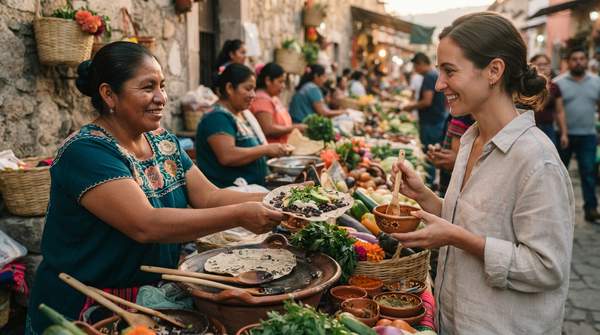
| Logistics | Do I want to shop for ingredients at a local market with the chef first, or go straight to the kitchen? | Market classes add a shopping and cultural layer; kitchen-only classes fit tighter schedules. |
| Class Environment | City kitchen or farmhouse in the hills? Small group or private? How much do I want to interact with strangers? | Group size and setting shape the whole day; check both in the listing, as Graham does. |
Once you've answered all four, you have a filter. A listing that matches your cuisine, participation level, logistics, and environment is a strong candidate; one that matches only the photographs is not.
Applying the Framework: Tuscany vs. Puglia Examples
Here's how the framework plays out against two very different regions. Suppose your profile says: broad foundation, full hands-on, market visit welcome, small group. Tuscany fits naturally. Chef Stefano of Italy Culinary Vacations recommends Tuscany for travelers who want "the broadest foundation in Italian home cooking" in a rural kitchen environment, with the logistical advantage of easy extensions into Florence, Siena, and the surrounding hill towns. Tuscan class menus commonly include hand-rolled pici, ribollita, fresh pasta shapes like fettuccine and pappardelle, stuffed pastas such as ravioli and tortellini, pizza-making, and desserts from panna cotta to crunchy cantucci—offerings drawn from typical provider listings. Settings range from city kitchens in Florence to farmhouse villas in the Chianti countryside, where local chefs bring in the region's butchers and growers.
Now suppose your profile says: deep regional specialty, technique-driven, kitchen-focused, intimate. Puglia is the stronger match. The region's cooking emphasizes the vibrant, sun-drenched flavors of southern Italy—fresh vegetables, olive oil, and seafood—reflecting its agricultural heritage and long coastline. Classes there typically center on mastering orecchiette pasta from scratch, preparing fresh seafood dishes, and making rustic breads and focaccia. Food writer and art historian Danielle Oteri, whose work explores regional specialties across both Tuscany and Puglia, underscores how distinct these regional traditions remain—Puglia's repertoire includes traditional recipes many visitors have never encountered.
Neither region is "better." The framework simply reveals that a traveler who wants a broad, logistically easy Tuscan foundation and a traveler who wants to hand-shape orecchiette beside the sea are shopping for different classes—and the right listing for each will say so explicitly.
Embark on Your Authentic Italian Culinary Adventure
Confidently choose an Italian cooking class that aligns with your specific regional cuisine interest, desired hands-on level, and overall travel style by applying the decision framework. Your measurable indicator is simple: a class description that explicitly matches your defined preferences across cuisine, hands-on level, market integration, and class environment. When you find a listing that names the regional dishes you want, promises the participation you're after, states whether a market visit is included, and specifies the group size and setting, you've found your class. If a listing leaves any of those four dimensions vague, keep looking or ask—your profile is the standard, and the right class will meet it.
Sources
- Best Cooking Classes in Italy: Pasta, Pizza & More — Beth Well Traveled
- How to Choose a Cooking Class in Florence (and Tuscany) — Towns of Italy
- Must-Do Cooking Classes in Italy | A Visitor's Guide — MamaFlorence
- Tuscany, Sicily, or Emilia-Romagna: Which is Best for Cooking Vacation — Italy Culinary Vacations