Cheesemaking transforms simple milk into a complex and flavorful food through a series of controlled scientific steps. At its core, the process involves using microorganisms and enzymes to separate milk into solid curds and liquid whey, then shaping and aging those curds to develop distinct textures and tastes. Understanding the science behind each action—from adding a starter culture to cutting the curd—reveals how cheesemakers can intentionally craft everything from a soft Brie to a hard Parmesan from the same basic ingredients.
The Foundation: Milk and Its Preparation
The cheesemaking journey begins with its foundational ingredient: milk. The choice of milk, whether from cows, goats, or sheep, is the first critical decision that shapes the final product, as each type contributes unique flavors and textures. According to Wisconsin Cheese, milk is the very foundation of cheese. Before the transformation begins, the milk often undergoes processing to ensure safety and consistency. In modern cheese plants, this includes pasteurization to eliminate harmful bacteria and standardization to achieve a consistent fat-to-protein ratio, as noted by the National Dairy Council. This initial preparation creates a stable and predictable canvas upon which the cheesemaker can work.
Culturing and Coagulation: The Start of Curd Formation
Once the milk is prepared and gently warmed, the first active step is acidification. Cheesemakers add carefully selected strains of bacteria, known as starter cultures. These microorganisms perform a crucial microbiological function: they consume the milk sugar (lactose) and produce lactic acid. This increases the milk's acidity (lowering its pH), which not only begins to develop flavor but also prepares the milk for the next, most dramatic transformation: coagulation. Following acidification, a coagulant—most commonly rennet—is introduced. The enzymes in rennet act on casein, the primary protein in milk, causing it to destabilize and tangle together, forming a solid gel-like mass. This enzymatic process, as described by the Science Learning Hub, is what separates the milk into solid curds and liquid whey, the fundamental division in all cheesemaking.
The Science Behind Each Cheesemaking Step
Every action a cheesemaker takes is designed to trigger a specific chemical or microbiological change. This controlled manipulation of milk's components is what allows for the creation of thousands of different cheese varieties. The following table breaks down the key stages of the process, linking the cheesemaker's craft to the underlying scientific principles and their direct impact on the final cheese.
| Cheesemaking Stage | Cheesemaker's Action | Primary Scientific Transformation | Impact on Curd/Cheese |
|---|---|---|---|
| Acidification | Adding starter cultures to warm milk. | Lactic acid fermentation: Bacteria convert lactose into lactic acid, lowering the milk's pH. | Initiates flavor development and prepares milk proteins for coagulation. |
| Coagulation | Adding rennet or another coagulant. | Enzymatic coagulation: Rennet enzymes cause casein proteins to form a solid gel. | Separates milk into solid curds and liquid whey. |
| Curd Handling | Cutting the curd into pieces. | Syneresis (whey expulsion): Cutting increases the surface area, allowing liquid whey to escape. | Determines moisture content. Smaller curds create drier, harder cheeses; larger curds create softer, moister cheeses. |
| Curd Cooking | Gently heating and stirring the curds. | Thermal syneresis: Heat causes the curd to contract, expelling more whey and firming its structure. | Further reduces moisture and develops the cheese's final texture. |
| Draining & Salting | Separating curds from whey and adding salt. | Osmosis and microbial inhibition: Salt draws out remaining moisture, slows acid production, and prevents spoilage. | Enhances flavor, acts as a preservative, and helps form the rind. |
| Pressing | Placing curds in a mold and applying pressure. | Mechanical whey expulsion and curd fusion: Pressure knits the curds together into a solid mass. | Shapes the cheese, removes the last of the whey, and creates a dense, uniform texture. |
| Aging (Ripening) | Storing the cheese in a controlled environment. | Proteolysis and lipolysis: Enzymes and microbes break down proteins and fats into complex flavor compounds. | Develops the cheese's characteristic aroma, flavor, and texture over weeks, months, or years. |
Curd Transformation: Cutting, Cooking, and Stirring
After the milk has set into a single, fragile curd, the cheesemaker's next actions focus on controlling its moisture content, which is a primary factor in determining the cheese's final texture. The curd is cut into smaller pieces, a step with significant scientific consequences. According to the National Dairy Council, the size of the cut is critical: cutting the curd into smaller pieces creates more surface area, which encourages the expulsion of liquid whey. This process is known as syneresis. Larger curds, by contrast, retain more moisture and lead to softer cheeses like Brie. To further expel whey and firm up the curds, they are often gently cooked and stirred. Each type of cheese has its own specific requirements for time and temperature during this stage, allowing the cheesemaker to precisely dial in the desired firmness and texture.
Draining, Salting, and Pressing: Shaping the Cheese
Once the curds have reached the desired consistency, they must be separated from the whey. The liquid whey is drained off, leaving the solid curds behind. At this point, another essential ingredient is introduced: salt. Salting is not just for flavor; it serves several scientific purposes. It draws out more moisture from the curd through osmosis, further drying and preserving it. Salt also helps to slow down the activity of the starter cultures and inhibit the growth of undesirable bacteria. After salting, the curds are placed into molds and pressed. Pressing knits the individual curds together into a cohesive wheel or block, expels the last of the residual whey, and begins the formation of a protective rind, giving the cheese its final shape and structure.
Aging and Ripening: Developing Complex Flavors
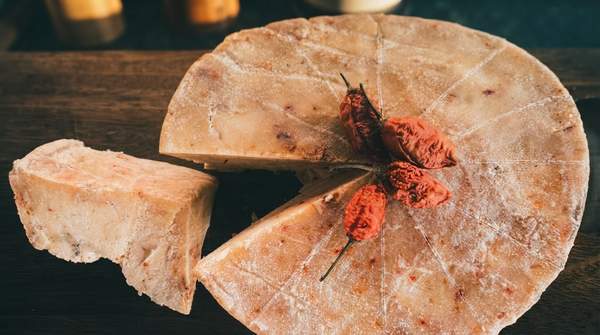
The final stage, known as aging or ripening (affinage), is where a young, often bland cheese develops its unique and complex character. The cheese is moved to a carefully controlled environment with specific temperature and humidity levels. During this period, which can last from several weeks to many years, a host of microbiological and enzymatic processes take place. According to the Science Learning Hub, microorganisms and enzymes break down the fats and proteins in the cheese into a wide array of aromatic compounds. This breakdown, which includes processes like proteolysis (protein breakdown) and lipolysis (fat breakdown), creates the distinctive flavors, aromas, and textures that define a mature cheese. For some varieties, like Swiss-type cheeses, this stage includes a period in a warm room to allow specific bacteria to produce carbon dioxide gas, forming the cheese's characteristic "eyes" or holes.
Mastering the Art: Applying Scientific Understanding
For anyone looking to appreciate or create cheese, the key is to move beyond simply following steps and instead focus on understanding the scientific purpose of each action to intentionally influence the final cheese's characteristics. Every decision—from the type of milk used to the temperature of the aging room—initiates a chain of chemical and biological events. By grasping the principles of acidification, coagulation, and moisture control, a cheesemaker gains the ability to troubleshoot problems and creatively guide the transformation from milk to a finished wheel of cheese. The true measure of this understanding is the ability to predict how changes in milk type, culture, or curd handling will alter the cheese's texture and flavor.
Sources
- How Is Cheese Made? A Guide to Cheesemaking — Wisconsin Cheese
- The science of cheese — Science Learning Hub
- How is Cheese Made? — Usdairy