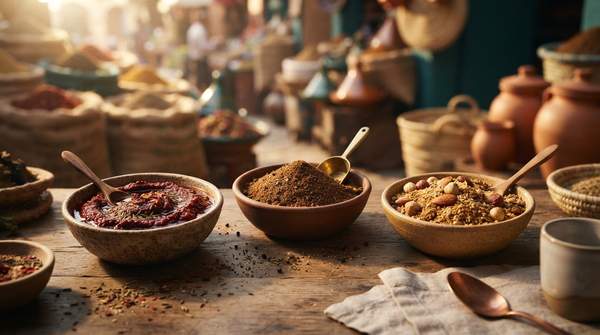
So you're standing in the spice aisle, staring at three jars with beautiful Arabic names, wondering which one your dinner actually needs. Here's the short answer: reach for harissa when you want heat and smokiness, baharat when you want warm, savory depth cooked into the dish, and dukkah when you want a nutty, crunchy finish. They aren't interchangeable—they're three different tools. Harissa is a chile-driven paste, baharat is an all-purpose dry blend, and dukkah is a pounded nut-and-spice condiment you sprinkle or dip. Let me walk you through each one.
Harissa: The Fiery Paste
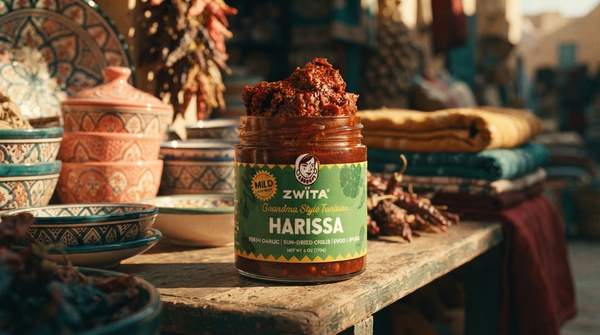
Harissa is the outlier of the Middle Eastern spice cabinet. While most regional blends are mild, focused on warm aromatics rather than chile heat, harissa is built around dried chiles—though, as one spice merchant's guide notes, it's "more complex than simply hot, with smokiness and savory depth alongside the heat." That's exactly why I like it.
Its base varies by recipe. A Tunisian version described by food writer Ruth Grindland uses roasted baklouti peppers, spices, tomatoes, and sometimes roasted red peppers. A homemade blend from the food blog The Noshery takes a different route: guajillo, New Mexico, and Thai dried chiles, plus caraway, coriander, cumin, salt, and garlic powder. The common threads are chiles, garlic, warm spices, and—when it's a paste—olive oil. And note that harissa also exists as a dry spice blend, not just a paste.
Baharat: The Aromatic Spice Blend
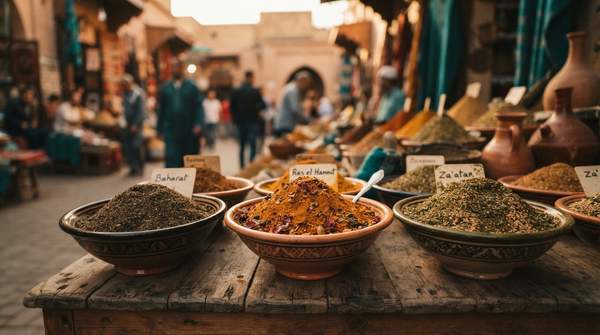
Baharat literally means "spices" in Arabic, and it's often called the Middle Eastern version of all-purpose seasoning. It's also known as Lebanese seven-spice, though the mixture varies by region and household. Typical ingredients include black pepper, allspice, cinnamon, nutmeg, coriander, cumin, paprika, cardamom, and cloves.
The result is warm, slightly sweet, fragrant, and earthy—the kind of seasoning that makes plain ground meat taste like it's been simmering all day, as one travel food writer puts it. It's used across the Levant and the Gulf to season meats, stews, and rice dishes, and it's mild: no chile heat to speak of, just layered aromatics.
Dukkah: The Nutty, Crunchy Condiment
Dukkah is the odd one out texturally. The name comes from the Arabic word for "to pound," reflecting its traditional preparation: nuts and spices ground coarsely in a mortar and pestle into a crunchy mixture rather than a fine powder. It hails from Egypt, where it's eaten for breakfast—good olive oil in a shallow dish, bread torn and dipped in the oil, then pressed into the dukkah.
Unlike the other two, dukkah delivers texture as much as flavor. It's a finishing condiment, not something you cook into a dish. And it has traveled: the recipe blog Wandercooks notes it's become popular in the US and Australia, where it can be an expensive "fancy" condiment to buy—which is a good argument for making it yourself.
Middle Eastern Seasonings at a Glance
Here's the side-by-side comparison. The key to using this table is matching your desired form—paste, powder, or crunchy topping—to your dish, then checking whether the flavor direction fits.
| Seasoning | Type | Key Ingredients | Flavor Profile | Best For |
|---|---|---|---|---|
| Harissa | Spicy paste (also sold as a dry blend) | Dried chiles (e.g., baklouti, guajillo, New Mexico, Thai), garlic, olive oil, caraway, coriander, cumin | Spicy and smoky, with savory depth; sometimes slightly sweet and roasted | Condiment, marinades, stews, soups, eggs, sandwiches, sprinkled over snacks |
| Baharat | Warm, aromatic dry blend (all-purpose) | Black pepper, cumin, coriander, cinnamon, cloves, nutmeg, paprika; often allspice and cardamom | Warm, slightly sweet, fragrant, earthy, savory; no chile heat | Meats, stews, rice, and fish dishes across the Levant and Gulf |
| Dukkah | Nut-and-spice condiment, coarsely pounded | Nuts and spices, traditionally pounded in a mortar; served with olive oil and bread | Nutty and crunchy; mild, focused on texture and warm spices | Finishing sprinkle, dip with oil and bread, breakfast in Egypt |
The pattern that emerges: harissa is the only genuinely hot one of the three, baharat is the workhorse you cook into food, and dukkah is the one you never cook—it goes on at the table.
Practical Uses in Your Kitchen
With harissa, think of it as both an ingredient and a condiment. Stir it into stews and soups, whisk it into marinades, or serve it alongside eggs and sandwiches. If you make the dry version, The Noshery suggests sprinkling it over popcorn, fries, toasted chickpeas, or nuts—a quick way to revive everyday snacks.
Baharat is your seasoning for anything simmered or roasted. People across the Middle East use it in rice, fish, and meat dishes, and it's a natural fit for ground meat, stews, and braises where its warm aromatics have time to bloom. Dukkah works the opposite way: don't cook it. Press bread dipped in olive oil into it, the Egyptian way, or use it as a crunchy topping for salads, dips, and finished plates.
Making Them at Home: A Quick Look
None of these require special skills, but they're not equal in effort. Dukkah is the fastest: Wandercooks' recipe uses pre-roasted nuts and a food processor—two minutes of prep, though purists can still pound it in a mortar. A dry harissa blend is also straightforward: toast dried chiles in the oven for about five minutes until fragrant, cool, then combine with the spices. A harissa paste is the most involved of the three, since it requires rehydrating and blending the chiles rather than just grinding them.
Baharat sits in between—no chiles to rehydrate, just spices to combine, with household recipes varying in their exact mix. Keep in mind these are general compositions; any commercial or homemade blend will taste a little different from the next jar.
Choosing Your Middle Eastern Seasoning
Here's the decision, distilled: select harissa for a spicy, aromatic kick in stews or as a condiment, baharat for warm, earthy depth in meats and rice, or dukkah for a nutty, crunchy topping on salads or dips. Match the form to the moment—paste for cooking heat in, powder for building flavor, pounded nuts for finishing—and you can't go far wrong.
Your measurable indicator is simple: taste the finished dish. If the seasoning delivered its intended profile—smoky heat from harissa, warm sweetness from baharat, nutty crunch from dukkah—you chose correctly. If you want heat and got none, or wanted crunch and got powder, swap to the seasoning built for that job, and you'll know at the first bite.
Sources
- Middle Eastern Spice Blends: The Complete Guide to the Region's Essential Seasonings — Spicestationsilverlake
- Middle Eastern Spice Guide — Sinful Kitchen
- homemade harissa spice powder — The Noshery
- A delicious guide to Middle Eastern Spices – GastroTravelogue
- Wandercooks