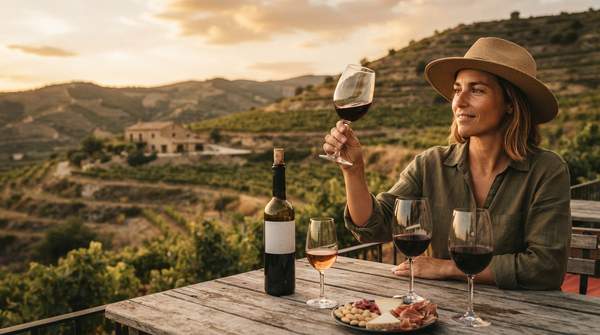
Spain's wine regions are not interchangeable. Rioja gives you established tourism infrastructure and a strong food culture; Ribera del Duero gives you a focused, serious red-wine experience; Priorat gives you rugged, off-the-beaten-path boutique wines within a couple of hours of Barcelona; and Jerez gives you Sherry wrapped in Andalusian culture. Travel specialists who plan Spanish wine itineraries tend to converge on the same logic: match the region to your travel style first, then build pairings around it, because Spain's wine regions are scattered enough that combining the wrong ones wastes days in transit.
Two things before we start. This is a guide to choosing a region, not a directory — I won't recommend specific hotels, restaurants, or wineries, since those change constantly. And I'm deliberately skipping cost, because it varies too widely depending on your accommodation and activity choices. What follows is a framework for the first and most consequential decision: where to go.
Spain's Premier Wine Regions: A Traveler's Comparison
The clearest way to see the differences is side by side. Each of the four major regions below has a distinct personality, a different wine focus, and a different kind of traveler it rewards. Wine itineraries built around La Rioja Alta's comparative tasting experiences between Ribera del Duero and Rioja make the point well: these two regions share the Tempranillo grape, yet their soils, climate, and winemaking philosophies produce markedly distinct identities. That's the whole premise of Spanish wine travel — same country, same grape even, completely different trips.
| Region | Best for… | Wine Style Focus | Travel Vibe | Pairs Well With… |
|---|---|---|---|---|
| Rioja | First-time Spanish wine travelers | Tempranillo-based reds, spanning traditional aged styles and modern fruit-forward ones | Established, accessible, gastronomic | San Sebastián or Bilbao for culinary excellence; Ribera del Duero for deeper red-wine exploration |
| Ribera del Duero | Serious red-wine enthusiasts | Powerful, concentrated, often age-worthy reds, primarily from Tinto Fino (Tempranillo) | Authentic, wine-centric, terroir-focused | Rioja for a comparative Tempranillo experience; Madrid for urban culture and access |
| Priorat | Boutique-wine seekers and active travelers | Bold, full-bodied Garnacha and Cariñena from steep llicorella slate terraces; highly concentrated, complex wines | Rugged, isolated, off the beaten path — a destination that needs time | Barcelona, roughly a couple of hours' drive away |
| Jerez | Culturally immersive travelers | Sherry across the full solera range: bone-dry Fino and Manzanilla through Amontillado and Oloroso | Southern-Spanish, flamenco- and food-suffused | Seville and Cádiz, plus Sanlúcar and El Puerto within the Sherry triangle |
Rioja deserves its reputation as the default starting point. Into the Vineyard, a travel company specializing in wine-country trips, calls it the strongest introduction for most first-time Spanish wine travelers, and the reasoning is visible in the region itself: an established tourism infrastructure, a gastronomic culture, and Tempranillo reds made in both traditional and modern styles. If you want a trip where the logistics take care of themselves and the wine comes with excellent food, this is your region.
Ribera del Duero is a different proposition. The region's wineries describe it as a place where landscapes become identity — powerful, concentrated, often age-worthy reds shaped by distinct terrain and winemaking philosophy. This is a wine-first destination for people who already care deeply about what's in the glass, and who want to compare it against its famous Tempranillo cousin in Rioja.
Priorat, in Catalonia, is the connoisseur's detour. Winedering, which covers Priorat's wine tourism in depth, describes steep terraced vineyards on red and black slate soils known as llicorella, producing bold, full-bodied Garnacha and Cariñena from a winemaking tradition that dates to the 12th century. Patty LeDonne, writing for The Road to Wine, calls it "an off the beaten path experience" set within the imposing rock walls of the Montsant Mountains — rugged, isolated-feeling, yet only a couple of hours from Barcelona. It rewards time and physical activity; squeeze it and you'll miss the point.
Jerez barely reads as "wine country" in the conventional sense, which is exactly its appeal. The Sherry triangle of Jerez, Sanlúcar, and El Puerto offers the solera system, a range from bone-dry Fino and Manzanilla through Amontillado and Oloroso, and the flamenco and Andalusian food that surround all of it — a southern Spain experience best paired with Seville and Cádiz, as Into the Vineyard frames it. Local operators echo this: Dominio de las Ánimas, a Jerez-based wine tourism outfit, highlights gastronomic pairing tours where Sherry wines meet local dishes, and insists the town "isn't just about wine; it's also about culture."
One honorable mention: Galicia's Rías Baixas, almost exclusively dedicated to Albariño whites, offers a legitimate alternative for white-wine drinkers tired of the overwhelmingly red focus of most Spanish wine guides. But travel planners are unanimous that it belongs to a Galicia journey in its own right — it cannot be tacked onto the end of a Rioja trip.
Crafting Your Itinerary: Logical Regional Pairings
Choosing a region is only half the decision; the other half is what you combine it with. Get this wrong and you'll spend your trip in a rental car. Here is the pairing logic that follows from geography and from how seasoned Spain-wine travel planners think.
The classic pairings that work
- Rioja + Basque Country (San Sebastián or Bilbao). This is the strongest single introduction to Spanish wine country, per Into the Vineyard's planning guidance. Northern Spain's wine heartland sits close enough to the Basque culinary capitals that you get both worlds — cellar doors and world-class pintxos — without a punishing drive.
- Rioja + Ribera del Duero (+ Madrid). With eight to ten days, this is the recommended deep-red itinerary. The pairing has a thematic elegance: both regions work with Tempranillo, and La Rioja Alta's own comparative experience treats the two as a "dialogue between wines" connected by the grape but separated by soil, climate, and winemaking philosophy. Madrid anchors the trip as the urban bookend and practical gateway.
- Priorat + Barcelona. The boutique-wine adventurer's route. Priorat's isolation is part of its charm, but its proximity to Barcelona — a couple of hours' drive — means you can pair rugged slate terraces and concentrated Garnacha with one of Europe's great cities.
- Jerez + Andalusia (Seville, Cádiz). Sherry belongs to a southern itinerary, paired with the culture that surrounds it — flamenco, Andalusian food, and the coastal towns of the Sherry triangle.
The combinations to avoid
The mistake to dodge on shorter trips is trying to stitch Spain's corners together. Jerez and Rías Baixas, in particular, usually belong to their own regional itineraries rather than being tacked onto a northern Spain wine loop — the geography simply doesn't cooperate. The same logic applies to combining Priorat with Rioja or Ribera del Duero: it's technically possible, but you'd spend more time on highways than in vineyards.
Notice the pattern in the working pairings: each combines one wine region with one complementary cultural or gastronomic destination that is genuinely nearby. That's the whole architecture. A Spanish wine trip is not a tour of all the appellations — Spain has dozens, and this guide deliberately covers only the major, well-established wine tourism regions — it's a focused base plus one enriching neighbor.
A practical note on pacing, drawn from Priorat coverage: travel writers describe it as "a destination that needs time for exploration." If your trip is under a week, one wine region plus one city is the comfortable ceiling; the multi-region comparative itineraries are a ten-day-plus proposition. I'm also setting aside the technical side of winemaking here — soil chemistry and barrel regimes matter to the wines, but they won't decide your route.
Making Your Choice: A Practical Decision
Select your primary Spanish wine region based on your dominant travel preference — classic accessibility, deep red-wine focus, boutique ruggedness, or cultural immersion — and then consider the logical regional pairings above for a cohesive itinerary. The test is simple: you should be able to name your region and your pairing in one sentence, and that sentence should describe the trip you actually want, not the one you think you ought to want.
Here is the measurable indicator that you've decided well: you have identified one or two primary regions that resonate with your travel style, and you have a clear understanding of how to combine them into a practical itinerary. Concretely — Rioja with San Sebastián or Bilbao if you're new and food-motivated; Rioja with Ribera del Duero and Madrid if you have ten days and care about reds; Priorat with Barcelona for the boutique-minded; Jerez with Seville and Cádiz for the culturally hungry. Pick one pairing, commit, and leave the rest for the next trip — Spain's wine regions will still be there, and they reward return visits.
Sources
- New wine tourism experience: “Ribera del Duero vs. Rioja: 2 regions and 4 wineries”. — Riojalta
- How to Plan a Spain Wine Country Trip — Into the Vineyard
- Spain Uncorked: These Wine Tourism Experiences Go Far Beyond Tasting Some of the Finest Bottles in the Country — Foodswinesfromspain
- Wine Tourism in Priorat - Top Experiences and Itineraries — Winedering Srl
- Priorat: Wine Travel — THE ROAD TO WINE
- Wine tourism routes in Jerez: What not to miss - Dominio de las Ánimas
- Practical Itinerary for Visiting the Priorat Wine Region • Winetraveler