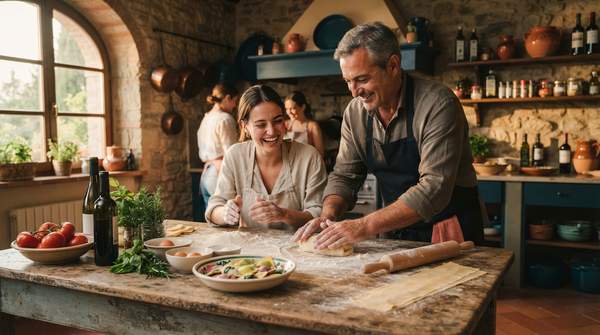
Here's the short answer: if you want skills you can take home, book a single-day cooking class. If you want to understand a city through its flavors without touching a knife, take a guided food tour. And if you want the deepest engagement—regional context, producers, and hands-on kitchen time woven together—commit to a multi-day regional immersion. The trade-off is simple: the deeper the cultural and practical engagement, the greater the time and financial commitment required.
Introduction: Your Italian Culinary Adventure Awaits
Italy rewards travelers who treat food as more than fuel. As the Accademia di Cucina Italiana puts it, a culinary journey through Italy is "not just about eating authentic pizza and pasta"—it is a cultural experience built around a lifestyle of daily simple pleasures. The question isn't whether to eat well in Italy; you will. The question is what kind of engagement you want while doing it.
Three formats dominate the culinary travel landscape, and they serve genuinely different travelers. Le Baccanti, a culinary travel specialist, frames it well: in Italy, cooking is "how families pass down stories, how communities express identity, and how a place reveals its soul." Each format gives you a different window onto that soul—one through your hands, one through your palate, and one through sustained time in a region.
Single-Day Cooking Classes: Hands-On Skill Building
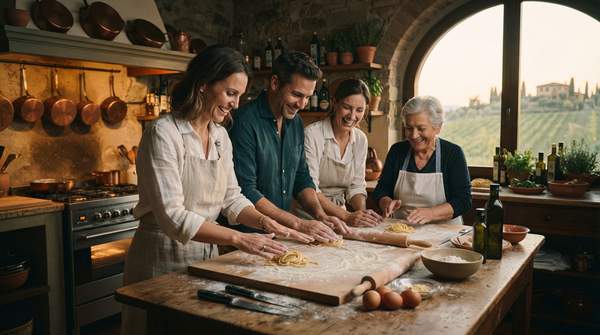
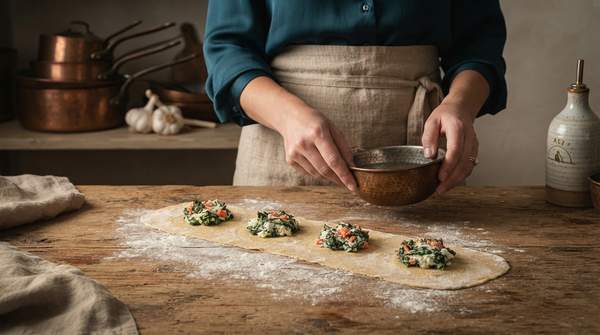
The cooking class is the most direct route to skills you can actually use after the flight home. Cooking Italy, which runs classes and tours, describes them as ideal for travelers who want to learn real techniques they can use at home, experience authentic Italian kitchens, and enjoy slower, more intimate cultural encounters. A pasta-making class is the classic entry point, teaching the fundamentals of Italian cooking in a single rewarding session.
Two caveats shape your expectations. First, most classes are designed for all skill levels, so beginners are welcome—but the skills you gain are typically limited to the dishes you prepare that day. Second, the extent of hands-on work varies: Culture Discovery Vacations, an operator that runs cooking vacations, warns that the word "class" covers everything from "a chef cooking while you watch to a full afternoon with your own hands in the dough." Ask before booking. The cultural depth here is real but bounded—tied to the specific dishes, family recipes, and region your class happens to feature.
Guided Food Tours: Discovering Local Flavors and Culture
The food tour trades the cutting board for the street. Instead of cooking, you explore the city itself—neighborhood trattorias, wine bars, markets, and artisan producers, as Cooking Italy describes it. This format suits travelers who prefer to explore rather than cook, and who want to discover local dishes, neighborhoods, and culinary traditions with a guide.
What you gain is observational rather than practical: the ability to recognize what's authentic and why. Context Travel's Rome tour promises you'll "learn how Romans recognize what is worth eating"—knowledge that becomes a souvenir of recipes, traditions, and stories to serve at your own table. Eating Europe's Rome tours similarly frame tastings as dishes that "tell the story of Rome's culinary culture," with offerings varying by day and season. The depth of insight depends heavily on your guide's expertise and the itinerary, so the tour is only as rich as the person leading it.
Multi-Day Regional Immersions: A Deep Dive into Italian Food Culture
This is where "immersion" stops being a marketing word. Esperienza's week-long Romagna tour bundles cooking lessons, wine tasting, behind-the-scenes demonstrations by award-winning chefs, in-home dining, and intimate interactions with hosts, moving from the seaside to the hills of river valleys. The Experiment's Italy program places participants in Asti for five days of small-group classes at a cooking school grounded in Slow Food philosophy, working extensively with local chefs using locally sourced ingredients.
The cost and time commitment are correspondingly serious. Chef Stefano of Italy Culinary Vacations reports that Italian cooking vacations range from $85 for an afternoon class to nearly $10,000 for a fully guided ten-day retreat, with that operator's own all-inclusive packages starting at $1,950 per person for four days and reaching $9,950 for ten days. Culture Discovery's Michael Kovnick offers a useful evaluation lens: real culinary immersion means not just that food was served, but that "somebody who knows the region refused to take the cheap option on your behalf, thirteen times in a row." When comparing packages, count only meals that are planned, paid, and actually feasible where you'll be standing.
What "Deep Immersion" Actually Means
How do you tell a deep experience from a decorated tourist activity? Look for three markers. The first is learning "why," not just "how"—why a sauce is made a particular way in a particular region, which is what distinguishes cultural understanding from recipe collection. The second is regional specificity: Le Baccanti's Emilia-Romagna experiences, for instance, pair you with pasta masters in Bologna or Modena making tortellini by hand, guided by artisans "whose families have perfected their technique for generations."
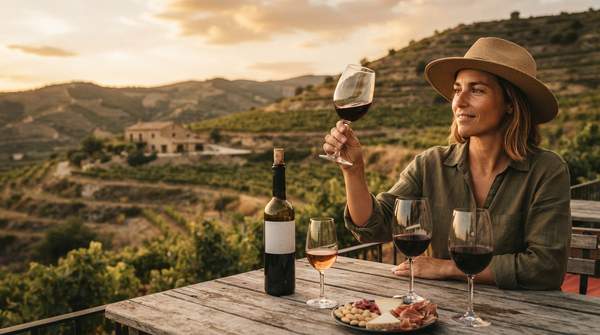
The third marker is direct connection to producers and place—cheese aging, truffle hunting, vineyard visits, meals in family homes. Multi-day programs deliver this by design; single-day classes can touch it if they source ingredients locally and situate dishes in regional tradition. A food tour can point at it, but you're observing the connection rather than living inside it.
Choosing Your Italian Culinary Journey: A Decision Framework
The table below compares the three formats against consistent traveler goals—skill acquisition, cultural depth, and discovery—so you can locate your own priorities at a glance. Costs and durations are illustrative and will vary by provider, location, and season.
| Experience Type | Best for... | Hands-On Level | Skills Gained | Cultural Context | Typical Duration | Illustrative Cost (per person) |
|---|---|---|---|---|---|---|
| Single-Day Cooking Class | Travelers who want to learn specific recipes and techniques to replicate at home | High, though it varies—confirm whether you cook or watch | Practical techniques tied to the dishes prepared that day | Family recipes and regional tradition, bounded by the class's dishes and region | A few hours to a full day | From around $85 for an afternoon class |
| Guided Food Tour | Travelers who prefer to explore rather than cook, discovering neighborhoods through taste | Low—tasting, observing, guided walking | Recognizing authentic local dishes; understanding regional ingredients and food history | Depends on the guide's expertise and itinerary; connects cuisine to city and story | Typically a few hours | Varies widely by city and inclusions |
| Multi-Day Regional Immersion | Travelers seeking the deepest engagement: kitchen training, producers, and regional culture together | High and repeated across multiple sessions | Extensive hands-on technique plus Slow Food principles and producer knowledge | Deep regional context: in-home dining, host interactions, chef demonstrations, terroir | Four to ten days | Roughly $1,950 to $9,950 for all-inclusive packages |
One pattern emerges from the comparison: hands-on participation and cultural depth rise together as duration increases, and so does price. There's also a sequencing option worth considering—Cooking Italy notes many travelers start with a food tour to understand regional flavors, then take a class to apply what they've learned and recreate the dishes themselves.
Savoring Your Choice: Finding the Perfect Italian Culinary Experience
Choose the Italian culinary experience that best aligns with your desired level of hands-on participation, skill development, and cultural depth, considering your available time and budget. If your goal is a replicable skill and you have one afternoon, a class wins. If you want a city decoded through its flavors without an apron, take a tour. If you have a week and the budget for it, the regional immersion delivers what the other formats can only gesture toward.
Whatever you pick, scrutinize the specifics before paying: whether the class is truly hands-on, whether your guide knows the neighborhood, and whether an "all-inclusive" week actually includes the meals where you'll be standing. The measurable outcome is simple: a traveler successfully identifies and books a culinary experience—cooking class, food tour, or multi-day immersion—that matches their personal travel goals.
Sources
- Foodie Tour of Italy: The Ultimate Guide to an Authentic Culinary Journey - Accademia di Cucina Italiana
- Best Italian Cooking Classes & Culinary Experiences Across Italy — Le Baccanti
- Food Tour vs Cooking Class in Italy: Key Differences Explained — Cooking Italy
- How Much Does an Italian Cooking Vacation Cost? - Culture Discovery Vacations
- Rome Food Tour — Rome Food Tour | Spot Real Roman Flavor
- Rome Food Tours — Eating Europe
- Culinary Immersion Tour in Italy — Esperienza
- Italy: Culinary Training & Culture — The Experiment
- How Much Does a Private Cooking Vacation in Italy Cost in 2026 — Italy Culinary Vacations
- What All-Inclusive Really Means for an Italian Cooking Vacation - Culture Discovery Vacations