Walk past a shelf of miso jars and you are really looking at three variables: the grain used for koji, the salt level, and how long the paste aged. Those three factors explain why Hatcho miso from Aichi tastes dark and intense, why Sendai miso is bold and salty, and why Kyoto's Saikyo miso is gentle and sweet. Once you understand what drives each style, choosing the right miso for a dish becomes straightforward.
The Fundamentals of Miso Making: Ingredients and Fermentation
Miso begins with soybeans, salt, and koji — the culture grown on a grain, most often rice, though barley koji defines mugi miso and soybean koji defines all-soybean styles. According to Hikari Miso, a Japanese producer, salt is added during mixing both for flavor and to regulate microbial activity during fermentation, and the exact ratio of soybeans, koji, and salt varies by type. Their Saikyo sweet miso, for example, uses a higher ratio of rice koji and less salt for a sweeter profile, while their red miso uses more soybeans and salt for a bold, deep flavor.
What happens in the vat is a tug-of-war between two processes. Koji House, a fermentation-focused guide, describes the science: enzymatic breakdown from the koji and microbial breakdown from bacteria such as lactobacilli both develop flavor as miso ages. Salt sets the pace — higher salt slows microbial activity, letting the koji enzymes dominate and producing a more umami-forward paste. Time deepens both processes, which is why longer-aged misos darken and concentrate.
This is the framework for everything that follows. More grain koji and less salt yields mild, sweet, pale misos. More soybeans, more salt, and more time yields dark, intense ones. The regional styles are simply different points on that spectrum.
Regional Miso Comparison: Ingredients, Aging, and Flavor
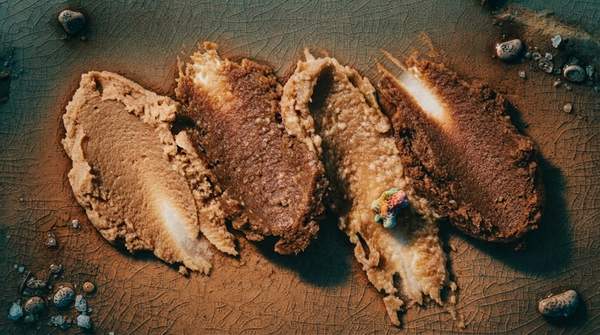
Three regional styles illustrate the spectrum clearly. Hatcho (also called mame miso) from Aichi prefecture is the outlier: Uwajimaya, a Japanese grocery retailer, notes that while most misos include a secondary grain, Hatcho is pure fermented soybean miso — just soybeans, water, and salt. Hikari Miso describes it as a dense, grain-free paste aged up to three years, dark with intense umami and a slight bitterness, giving depth to bold regional dishes like miso-katsu and miso nikomi udon. Koji House adds that its extreme darkness comes directly from that long, roughly three-year fermentation.
Sendai miso sits in the middle. Hikari Miso traces it to a practical origin — developed to feed soldiers during long military campaigns — and describes it as a medium-dark rice miso with bold, salty depth and a subtle tang, fermented longer than white miso for a complex but balanced profile. Saikyo miso from Kyoto anchors the mild end: its high proportion of rice koji and lower salt give it sweetness and a lighter color, and it is central to Kyoto's refined cuisine, appearing in miso soup, miso-marinated fish, and eggplant dengaku.
| Region / Type | Primary Ingredients | Fermentation / Aging | Flavor Profile | Common Culinary Uses |
|---|---|---|---|---|
| Hatcho Miso (Aichi) | Soybeans only — no grain; just soybeans, water, and salt | Long aging, up to about three years | Intense umami, slight bitterness; dark with a thick, strong taste | Bold regional dishes: miso-katsu, miso nikomi udon, dengaku |
| Sendai Miso | Soybeans with rice koji; a medium-dark rice miso | Fermented longer than white miso | Bold, salty depth with a subtle tang; complex but balanced | Hearty soups, marinades, and glazes that stand up to its robust saltiness |
| Saikyo Miso (Kyoto) | High proportion of rice koji, less salt | Shorter aging than red styles, keeping it light | Mild and sweet with a lighter color | Kyoto's refined dishes: miso soup, miso-marinated fish, eggplant dengaku |
Read the table as a decision tool, not just a reference. The defining variable for Hatcho is the absence of grain — nothing dilutes the soybean intensity — compounded by the long aging that darkens it. For Sendai, it is the extended fermentation of a rice miso, which builds its salty, tangy boldness. For Saikyo, it is the koji-heavy, low-salt recipe, which keeps the paste sweet and pale. Match the variable to your dish: richness and depth call for Hatcho, hearty robustness for Sendai, and delicacy and sweetness for Saikyo.
Choosing and Using Miso in Your Kitchen
Practical selection follows from those characteristics. If you are making a rich glaze or a hearty soup where you want the miso to assert itself, a long-aged, high-soybean style like Hatcho or Sendai is the right tool. If you are marinating fish or dressing vegetables where sweetness and gentleness matter, Saikyo-style white miso is the better choice. And if a recipe simply says "miso," the medium-dark rice styles offer the most versatile middle ground.
Handling matters as much as choosing. Yotam Ottolenghi, writing in his own newsletter, offers a blunt rule for cooking with it:
Never boil it — you'll lose a lot of flavour and some of the health benefits.
He also recommends storing miso tightly sealed in the fridge, where it lasts for months — up to a year for red miso — and suggests checking the sell-by date and avoiding varieties with too many additives.
Miso also travels far beyond soup. Ottolenghi treats it as a flavor shortcut in unexpected places, including miso butter and miso caramel, where its salt and umami sharpen sweetness. The fermentation world has stretched further still: he points to varieties sold at Wylde Market from a former fermentation lead at his restaurant Rovi, including marrowfat pea miso, pumpkin miso, and even organic rainbow badger bean miso. These non-soybean misos show that the basic principle — koji, salt, and time applied to a substrate — is not limited to soybeans at all.
For home fermenters, the same variables you use to choose a jar are the ones you control in a vat: the grain (or absence of one) for your koji, your salt level, and your patience. A koji-heavy, low-salt mix will drift sweet and pale; a soybean-dense, salty, long-aged one will drift dark and intense. Precise recipes for reproducing each regional style take further research, but the direction of every adjustment is already mapped by the table above.
Mastering Miso: Selecting and Experimenting with Regional Flavors
The decision for home cooks is simple: select miso by its ingredient composition and fermentation duration, because those two factors reliably predict the flavor you will get — grain-free and long-aged for intensity, rice koji and low salt for sweetness. Then experiment beyond the traditional bowl of soup. The measurable indicator of success is straightforward: you can tell you have internalized the framework the day you have used different regional misos across a variety of dishes — a marinade, a dressing, even a caramel — and chosen each one deliberately for its sweetness, saltiness, or depth rather than by default.
Sources
- How Is Miso Made? From Soybeans to Fermented Miso Paste — Hikari Miso
- What is Miso and How Do I Make it? — Koji House
- Understanding the Different Types of Miso - Uwajimaya
- Types of Miso — Hikari Miso
- Get To Know Your Miso — Ottolenghi