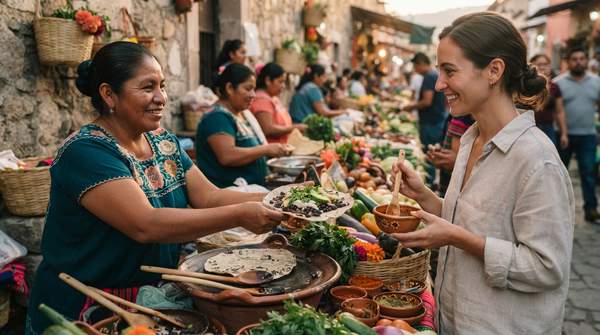
In a bustling Bangkok market, veteran guide Somchai now begins his tours not by listing historical facts, but by asking tourists what AI has already told them, then immediately pivoting to the vibrant, unscripted stories and hidden alleyways only he knows. This shift in engagement reflects a broader transformation for Southeast Asian tour guides in 2026, as travelers increasingly arrive with AI-generated itineraries. The once-standard role of information dispenser has evolved, demanding guides to offer deeper, more personalized narratives that AI cannot replicate.
Tourists are increasingly using AI for initial travel planning, but their demand for authentic, human-led local experiences is simultaneously surging. This creates a market tension where efficiency-driven AI tools handle the preliminary logistics, while human guides are sought for the irreplaceable connections and spontaneous discoveries that define memorable journeys.
Based on the rapid adoption of AI in travel planning and the demonstrated adaptability of local guides, the future of Southeast Asian tourism will likely feature a symbiotic relationship where AI handles logistics, and human guides deliver irreplaceable cultural depth and spontaneous discovery.
Tour guides across Southeast Asia report a 30% drop in requests for basic itinerary planning, according to the Survey of SEA Guides. Travelers now arrive with AI-generated, highly specific questions, as noted by the Travel Agent Association of Thailand, indicating a new baseline of knowledge. Younger travelers aged 18-35 are 2x more likely to use AI for initial trip planning, a TripAdvisor User Survey reveals. The preference of younger travelers aged 18-35 for AI in initial trip planning confirms AI's rapid integration into pre-travel routines. Guides must now adapt, moving beyond basic information to address AI-informed queries and offer deeper value through reactive storytelling.
The AI Effect: From Information Brokers to Experience Curators
Dr. Anya Sharma, a tourism researcher, observes that AI travel planners often miss cultural nuances and off-the-beaten-path gems, meaning AI-generated plans lack the immersive quality many travelers seek. This limitation is stark against a 40% surge in demand for 'authentic local experiences,' according to Klook Travel Data, showing a growing appetite for unique, human-led interactions. Furthermore, AI struggles with real-time problem-solving, like unexpected closures, as indicated by Travel Blogger Testimonials. AI's limitations in cultural depth, spontaneity, and adaptability prove the irreplaceable value of human guides. Companies empowering guides to pivot from logistical planners to cultural storytellers will capture the premium segment of the post-AI travel market, evidenced by this rising demand for authentic, unscripted experiences.

The Numbers Behind the Transformation
- 15% — Average income for traditional, non-specialized guides has decreased in the last year, according to a Regional Tourism Economic Report.
- Tourists are willing to pay a premium for human-led tours that offer deep cultural immersion, according to Booking.com Premium Experiences.
- The number of independent tour guides has increased, leveraging online platforms like GrabExperiences and Airbnb Experiences.
The decline in average income for traditional guides and the willingness of tourists to pay a premium for human-led tours reveal a clear market bifurcation: a decline for generalist services and a growing, premium market for specialized human expertise and entrepreneurial guides. This realignment means guides offering unique, immersive experiences find greater value, with AI catering to transactional efficiency while human guides capture the experiential luxury segment.
Why Human Connection Still Reigns Supreme
Guides offering unique storytelling or access to local communities are seeing increased bookings, according to the Phuket Guide Collective, showing the premium placed on authentic narratives and insider access. Some guides now use AI to create personalized, niche tours, as reported by the Indonesian Tour Guide Federation, streamlining preparation while preserving human-centered experiences. While AI tools, like Google Travel AI features, can instantly translate facts, they lack the contextual depth a human provides. The future of travel is a hybrid model: AI handles the mundane, freeing human experts to deliver the irreplaceable emotional and cultural depth travelers increasingly seek, redefining guides' roles to foster genuine connections.
Adapting and Innovating: The Future-Proof Guide
Guides are transforming into digitally savvy cultural curators, embracing new tools and collaborations to enhance their value. They are upskilling in digital marketing and social media, a movement supported by the Vietnam Tourism Board Initiative. Training programs now include AI integration and specialized niche development, according to the ASEAN Tourism Training Institute. Some guides form cooperatives to share resources and market specialized tours, exemplified by the Cambodian Eco-Tourism Network. Proactive adaptation through digital upskilling, strategic AI integration, and collaborative specialization is proving crucial for guides to carve out new niches, focusing on unique cultural immersion and authentic local connections to thrive in the evolving travel market.
Navigating the New Travel Landscape
- Government tourism boards, like the Singapore Tourism Board, are investing in digital literacy programs for guides.
Investment in digital literacy programs for guides supports a synergistic model where AI handles efficiency, enabling guides to focus on delivering unparalleled human connection and specialized cultural insights. This symbiotic relationship elevates the travel experience, proving that AI's ubiquity in basic planning increases the perceived value and demand for human guides.
By Q3 2026, the Singapore Tourism Board's investments in digital literacy programs for guides are projected to increase guide-led tour bookings by 10% in the cultural immersion segment, demonstrating the success of a hybrid AI-human model.