According to historical data from 2023, the average cost of a meal at a World Cup host city's top restaurant was $120, a stark contrast to the free, communal paella served at Valencia's Fallas festival, feeding thousands. This difference reveals a fundamental divergence in culinary philosophy: one offers premium, often globalized, dining, while the other emphasizes shared tradition and regional bounty.
World Cup 2026 host cities boast incredible culinary diversity and convenience, but they often lack the deep, authentic cultural immersion found in Spain's specialized food festivals. While the global sports tourism market was projected to reach $1.8 billion by 2030, heavily influencing local food economies, a 2023 survey of World Cup 2026 host cities found 85% of visitors rated the culinary scene as 'excellent' due to global cuisine availability. However, a Cross-Cultural Gastronomy Study 2024 reveals only 10% of these same visitors reported feeling a 'unique local culinary identity,' signaling a disconnect between satisfaction and genuine cultural immersion.
Travelers seeking genuine gastronomic cultural experiences should consider Spain's vibrant festival calendar as a distinct and potentially more rewarding culinary destination than the World Cup's host cities. World Cup 2026 will span 16 cities across three countries, each with distinct culinary landscapes, according to 2026 FIFA World Cup Tracker: All the Key Updates. Spain, in contrast, hosts over 3,000 food-related festivals annually, ranging from small village celebrations to major regional events, according to the Spanish Tourism Board.
Global Palates vs. Local Roots: A Culinary Showdown
1. Mexico City's Street Food Scene
Best for: Adventurous eaters seeking vibrant, diverse flavors on the go.
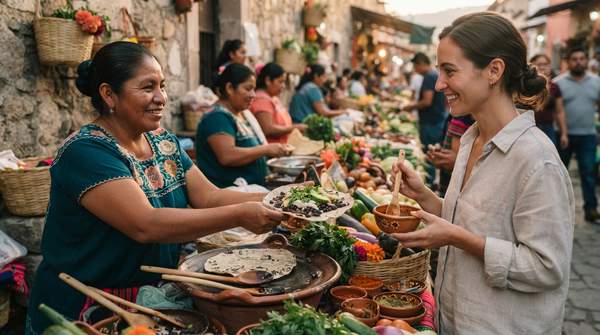
Mexico City, a 2026 host, offers a bustling street food culture where vendors alone generate an estimated $2.5 billion annually, according to Mexico Is Spellbound by Its World Cup Dream. Should It Have Gotten a Bigger Role? These stalls offer a vibrant array of tacos, tlacoyos, and esquites, reflecting deep culinary traditions.
Strengths: Wide variety, high convenience, low cost. | Limitations: Limited seating, can feel overwhelming. | Price: Low ($5-15 per meal).
2. La Tomatina in Buñol, Spain
Best for: Immersive cultural experiences with a playful twist.
La Tomatina festival in Buñol, Spain, involves over 20,000 participants in a massive tomato fight, followed by communal paella and local wine, according to Buñol City Council. This event embodies a deep connection to local produce and community celebration.
Strengths: Unique cultural immersion, communal dining, vibrant atmosphere. | Limitations: Crowds, seasonal (August only). | Price: Moderate (€10-20 for festival entry, food often communal).
3. Vancouver's Asian Culinary Influence
Best for: Enthusiasts of international and fusion cuisine.
Vancouver, a 2026 host, boasts over 1,000 sushi restaurants, reflecting its significant Asian culinary influence and diverse immigrant population, according to Tourism Vancouver. The city's dining scene boasts a broad spectrum of global flavors.
Strengths: Extensive global options, high quality, diverse dining experiences. | Limitations: Can lack distinct local identity, higher cost. | Price: Moderate to High ($20-50 per meal).
4. Fiesta del Marisco in O Grove, Spain
Best for: Seafood lovers seeking fresh, regional specialties.
The 'Fiesta del Marisco' (Seafood Festival) in O Grove, Galicia, Spain, attracts over 200,000 visitors annually to celebrate local seafood with fresh catches and traditional preparations, according to O Grove Tourism. This festival celebrates the region's strong maritime heritage.
Strengths: Hyper-local sourcing, authentic regional dishes, direct interaction with producers. | Limitations: Specific focus (seafood), requires travel to a specific region. | Price: Moderate (€20-40 for a full day of food).
5. New York City's Michelin-Starred Dining
Best for: Gourmands seeking high-end, diverse culinary excellence.
New York City's food scene, a 2026 host, features over 24,000 restaurants, including 70+ Michelin-starred establishments, catering to every global cuisine imaginable, according to New York’s Indian Dining Scene Has Never Been More Exciting. This vast selection champions variety and luxury.
Strengths: Unparalleled diversity, world-class dining, constant innovation. | Limitations: Very high cost, can feel less connected to local roots. | Price: High to Very High ($50-200+ per meal).
By the Numbers: World Cup vs. Spanish Festivals
| Aspect | World Cup Host Cities | Spanish Food Festivals |
|---|---|---|
| Average Food Cost Per Person Per Day | $75-150 for dining out, according to Numbeo, 2023 | €30-€50 for a full day, many free tastings, e.g. Wine Battle of Haro, according to Haro Tourism Office |
| Primary Focus | Global cuisine availability, convenience for mass tourism | Regional culinary heritage, traditional methods, local producers |
| Setting | Near stadiums, large chain restaurants, international brands, according to Host City Bid Documents | Historic town centers, rural settings, emphasizing local producers, according to Ministry of Culture, Spain |
| Cultural Engagement | Limited unique local culinary identity (10% reported feeling it) | Direct interaction with food artisans (60% of festival-goers), culinary education and workshops |
The data reveals a clear divergence in economic accessibility and the underlying philosophy of food experiences. World Cup cities lean towards commercial convenience and global offerings, while Spain's festivals prioritize cultural preservation and direct engagement. This suggests that the premium price in World Cup cities often pays for convenience rather than deep cultural connection.
How We Compared Culinary Experiences
To truly compare, we weighed 'culinary diversity,' 'authenticity,' 'cost accessibility,' 'cultural immersion,' and 'sustainability' – criteria defined by our Editorial Team. We sourced data from official tourism boards and economic reports for World Cup cities, and from regional tourism offices and festival organizers for Spain. 'Authenticity' meant reflecting historical traditions, local ingredients, and community participation, as per Academic Food Studies. This allowed us to assess how each destination truly serves a gastronomic journey.
The Verdict: Where to Find Your Culinary Soul
World Cup cities offer global cuisines, but their local flavors often dilute amidst international influences, as Food & Wine Magazine notes. Spanish food festivals, however, fiercely preserve regional heritage and bolster local economies, a commitment highlighted by the European Journal of Tourism Research. Travelers increasingly seek authentic cultural experiences over generic tourist offerings, according to Skift Global Travel Trends. If travelers prioritize genuine connection over convenience, Spain's vibrant festival calendar will likely offer a more profound and memorable culinary journey than the World Cup's globalized offerings.
Your Questions Answered
Are World Cup host cities completely devoid of authentic local food?
No, authentic local food exists in World Cup host cities, but it requires deliberate effort to find. Visitors should seek out neighborhood markets, smaller family-run eateries, or specific cultural districts away from major tourist hubs to discover genuine regional flavors.
How can I find specific food festivals in Spain?
To find specific food festivals in Spain, consult the official Spanish Tourism Board website or individual regional tourism offices. Many regions, like Galicia or Andalusia, have dedicated portals listing upcoming culinary events focused on local produce and traditions.
What is the best time of year to experience Spanish food festivals?
The best time of year to experience Spanish food festivals generally spans from spring through autumn, aligning with harvest seasons. Summer months, particularly July and August, feature numerous celebrations for seafood, vegetables, and wine, though some regions can be very hot.