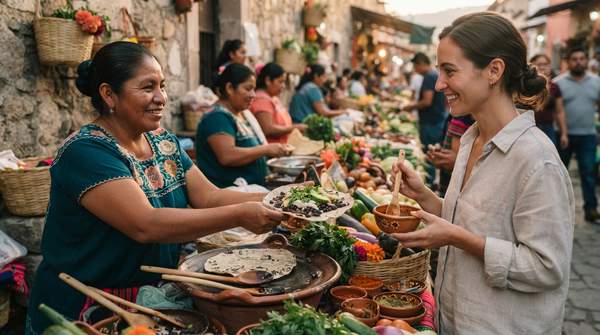
By 2025, over half of travelers will prioritize food when planning trips, according to Grandview Research. 81% of travelers actively seek culinary adventures abroad by that same year, marking a significant shift in global travel motivations.
Culinary tourism shows explosive growth and widespread traveler interest. However, its strategic importance as a primary travel driver often remains overlooked by destinations and the broader travel industry.
Based on current growth trajectories and consumer behavior, culinary and wine tourism will likely become indispensable pillars of the global travel industry, requiring destinations to strategically invest in and market their unique gastronomic offerings to remain competitive.
Over half of all travelers will prioritize food in trip planning by 2025, according to Grandview Research. Approximately 81% of travelers actively anticipate culinary adventures when journeying abroad by 2025, indicating a fundamental shift in how people approach travel experiences and further emphasizing food's central role in their plans.
Culinary experiences are no longer secondary but central to trip planning, revealing a profound shift in traveler priorities. This widespread demand suggests a strong market for diverse food-focused itineraries, making planning a culinary travel food adventure in 2026 a key consideration for many.
The Exploding Appetite for Culinary Adventures
The global culinary tourism market was valued at USD 16.11 billion in 2025, according to Grandview Research. This sector is projected to expand significantly, reaching USD 76.36 billion by 2033. The market is expected to grow at a Compound Annual Growth Rate (CAGR) of 21.9% from 2026 to 2033, indicating rapid expansion.
Culinary tourism is a high-growth sector, exceeding many other segments of the travel industry in its economic expansion. The sustained high CAGR points to a robust and expanding market for food-centric travel experiences, which destinations must acknowledge.

Wine Tourism: A Spirited Segment of Gastronomic Travel
Despite the projected $16.11 billion valuation for the entire global culinary tourism market in 2025, the global wine tourism market alone was valued at $46.47 billion in 2023, according to Grandview Research. The stark contrast suggests either a definitional discrepancy or a severe undervaluation of the broader culinary tourism sector, potentially excluding its largest components like wine.
The wine tourism market is projected to reach $106.74 billion by 2030, growing at a CAGR of 12.9% from 2024 to 2030, as reported by Grandview Research. Wine tourism's robust growth highlights its established appeal and significant economic power as a specialized form of culinary exploration, underscoring its disproportionately powerful role within gastronomic travel.
Beyond the Plate: What Drives Culinary and Wine Experiences
Wine tastings and tours accounted for over 57% of the wine tourism market's revenue share in 2023, according to Grandview Research. A strong preference for direct, experiential engagement with wine products is indicated.
Domestic tourists generated over 64% of the wine tourism revenue share in 2023, as also reported by Grandview Research. Local food and beverage experiences are a powerful, often overlooked, driver for regional economies, challenging the traditional focus on international visitor attraction.
The first-ever global survey on wine tourism consumer trends, the Global Wine Tourism Report 2025, was conducted by Geisenheim University in collaboration with UN Tourism, OIV, GWC, and WineTourism.com, according to UN Tourism. The dominance of direct experiences like tastings and tours, supported by significant domestic engagement and dedicated global research, indicates a sophisticated and well-understood market segment.
Staying Current: The Evolving Landscape of Food Travel Data
Timely data remains crucial for understanding the dynamic culinary tourism sector. Research published in January 2022, detailing current trends on food tourism approaches, provides a framework for management, according to ResearchGate. The recency of key research highlights the continuous evolution of culinary tourism, making timely data crucial for both travelers and industry stakeholders to adapt strategies.
Your Culinary Travel Questions Answered
What are some top destinations for food travel?
Many regions globally offer rich culinary experiences. Destinations like Italy are renowned for pasta and regional wines, while Mexico provides vibrant street food and traditional dishes. Southeast Asian countries, such as Thailand, attract travelers with their diverse spices and fresh ingredients, offering distinct gastronomic journeys for exploration.
How can travelers plan a food-focused vacation?
Planning a food-centric trip involves researching local specialties and seasonal ingredients before arrival. Consider booking cooking classes or guided food tours to gain deeper insights into regional cuisine. Visiting local markets also provides an authentic experience of a destination's food culture and supports local producers.
What is culinary tourism and how does it work?
Culinary tourism centers on exploring food as a way to experience culture and heritage. It functions by engaging travelers in activities like farm visits, dining at local restaurants, attending food festivals, and participating in culinary workshops. This approach allows visitors to connect with a destination's identity through its unique gastronomic offerings.
The Future is Flavorful: Embrace Your Next Culinary Journey
Based on Grandview Research's projection that over half of travelers will prioritize food by 2025, destinations that fail to integrate unique culinary experiences into their core marketing strategies risk becoming irrelevant. The stark contrast between the $16.11 billion culinary tourism market and the $46.47 billion wine tourism market, both from Grandview Research, suggests the broader culinary sector is either severely undervalued or poorly defined, indicating massive untapped opportunity beyond wine.
Grandview Research's finding that domestic tourists contribute over 64% of wine tourism revenue reveals that local food and beverage experiences are a powerful, often overlooked, driver for regional economies. To remain competitive, destinations must recognize and strategically invest in their unique gastronomic offerings. For instance, by Q3 2026, local tourism boards could implement new campaigns targeting regional culinary events, aiming to capture a larger share of the growing domestic food travel market.