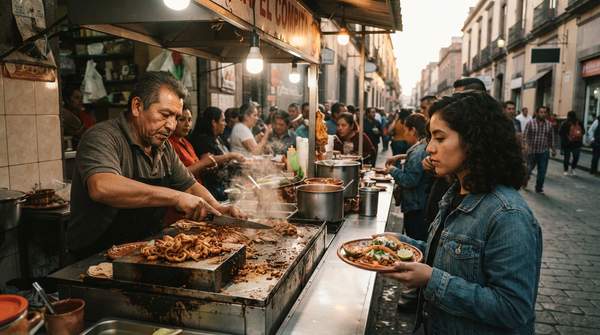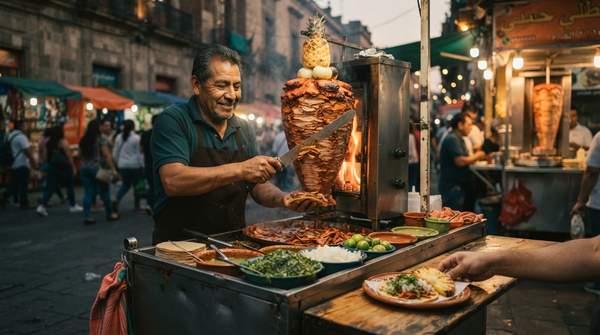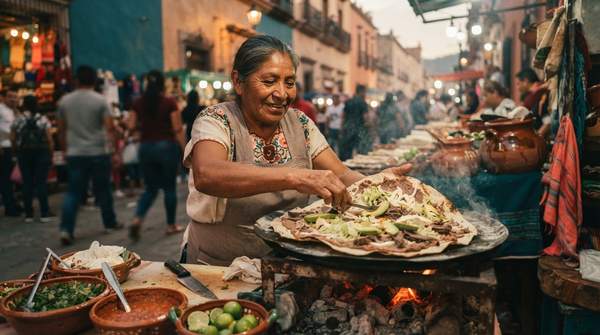
Why does the same country that gave the world the taco also produce a charcoal-grilled Oaxacan tortilla the size of a dinner plate, a Pueblan sandwich on its own bread, and a Morelos taco stacked like a warship? The answer is regionalism. Mexican street food varies dramatically from state to state because local agriculture, climate, Indigenous cultures, geography, and historical influences each shaped what vendors could cook—and what communities wanted to eat. Tacos may be the best-known Mexican street food worldwide, but as one street food history guide notes, tamales, tortas, birria, elote, tlayudas, cemitas, panuchos, and many regional specialties are equally important throughout Mexico. Here is how to read that map.
The Tapestry of Mexican Street Food: A Regional Overview
Start with the pattern rather than the dishes. Baja specializes in seafood; the Yucatán is famous for citrus-marinated pork; Oaxaca celebrates corn and mole. Those pairings are not accidents of fashion—they reflect what each region grows, catches, and inherited. A regional cuisines guide from RJ Mexican Cuisine puts it succinctly: corn and chile are the national thread, and everything else is regional interpretation. The same chile plays a different role depending on where you are—base flavor in a mole, sharp heat in an aguachile, or subtle warmth in a Yucatecan marinade. Once you understand that logic, ordering becomes a form of travel itself.
Factors Shaping Mexico's Culinary Landscape
Three forces do most of the work. Geography and climate determine the raw materials: a peninsula surrounded by water eats differently than an inland valley. Indigenous cultures supply technique and tradition that predate the Spanish arrival by centuries—a plate of cochinita pibil, as the RJ Mexican Cuisine guide observes, carries Maya technique older than the country itself. And history layered new ingredients onto those foundations rather than replacing them, which is why a mole is described as a reflection of Puebla's or Oaxaca's history rather than simply "a sauce." The table below gathers these drivers and pairs each with a dish you can actually find on the street.
Understanding Mexico's Regional Street Food Diversity
Use this table as your orientation device: each row links a driving factor to a description and a concrete street food example tied to its state, so the "why" and the "where" stay connected as you plan.
| Driving Factor | Description | Example Dish & Region |
|---|---|---|
| Geography and climate | Coastal and peninsular regions build their street food around what the land and sea provide, while inland regions lean on corn, pork, and mole traditions. | Seafood specialties in Baja California, including fish tacos |
| Indigenous cultures | Maya technique and pre-Hispanic traditions continue to shape flavors and preparation methods in the south and southeast. | Cochinita pibil, the slow-roasted, citrus-marinated pork of the Yucatán |
| Local agriculture and corn traditions | Regional corn and mole cultures define what a state's most iconic street snack looks and tastes like. | Tlayudas in Oaxaca, where corn and mole are celebrated |
| Regional identity and pride | States adopt signature dishes that become points of local distinction, named and defended as their own. | Carnitas in Michoacán; cemitas in Puebla; taco acorazado in Morelos |