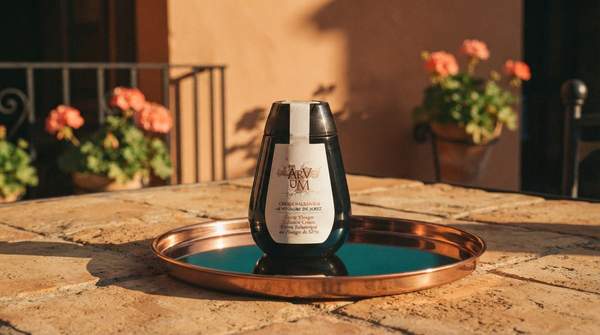
Two of Europe's most celebrated artisanal vinegars began with the same accident — wine gone sour — but they could hardly be more different today. Traditional balsamic vinegar of Modena starts not with wine at all but with cooked grape must, aged patiently for a minimum of 12 to 25 years in a series of wooden barrels. Sherry vinegar, by contrast, is born from sherry wine itself and matures in the dynamic solera system, a cascade of stacked casks in which old vinegar is continuously refreshed with young. Understanding these two paths explains why the bottles in your pantry are not interchangeable.
The Ancient Roots of Artisanal Vinegars
Vinegar is almost certainly older than the wine it comes from — leave any alcoholic liquid alone and it will sour itself. In medieval Europe, monasteries became the great centers of vinegar production, as Nicole Wayland's cultural history of vinegar recounts, with monks developing specific techniques for wine and malt vinegars and acting, in effect, as the original artisanal producers. It was in this monastic and noble world that the two great regional traditions took shape.
Balsamic vinegar emerged in Modena, Italy, during the Middle Ages — its presence documented by 1046 — and was initially prized by nobility not for cooking but as a medicine. What began as noble medicine, as Wayland puts it, became a culinary treasure. Spain's answer would arrive through the sherry country of Jerez, where vinegar was for centuries the byproduct of winemaking: as winemaking techniques improved, the volume of "sour" wine that had to be dealt with grew smaller and smaller, and what remained was deliberately cultivated into a product worth keeping.
Traditional Balsamic Vinegar: A Legacy of Cooked Grape Must
Here is the crucial distinction most home cooks miss: true Traditional Balsamic Vinegar of Modena is not wine vinegar. As the Modena producer Balsamico Bonini explains, unlike commercial balsamics — made from wine vinegar with added grape must and aged just a few weeks — the traditional product is made exclusively from cooked grape must, the concentrated juice of pressed grapes, and follows a natural aging method. The Emilian farm La Cà dal Non is even more emphatic, describing its production as built on "one ingredient: cooked grape must."
The aging happens in a batteria, a series of wooden barrels of decreasing size. The barrels themselves are a flavor instrument: oak lends structure and balance, chestnut deeper color and tannins, cherry gentle sweetness, juniper aromatic complexity, and mulberry increased concentration, according to the centuries-old producer Acetaia Giusti, which has aged vinegar in historic barrel batteries since 1605. The minimums are extraordinary — 12 years, and 25 for the older designation — so long that, as La Cà dal Non observes, the product is handed down from generation to generation.
Sherry Vinegar: The Solera System's Spanish Heritage
Sherry vinegar's identity is legally defined. Under the Regulations of the Protected Designation of Origin, as Shawn Hennessey explains in his guide to sherry vinegar, it must result from the acetic fermentation of wines from the Sherry Region, produced and aged using the traditional practices of the area. Where balsamic is one ingredient, sherry vinegar is made like sherry itself — from a blend of different wines.
Its soul is the solera system. The casks are stacked with the oldest vinegar — the solera — on the floor, and progressively younger vinegars in rows above, called criaderas. Only the vinegar from the solera is bottled; each withdrawal is topped up from the first criadera, which is topped up from the second, and so on, until young vinegar enters at the top. The result is a vinegar that carries the character of every previous vintage, blended continuously across years of fermentation in a series of increasingly smaller oak barrels.
Traditional Balsamic vs. Sherry Vinegar: A Comparative Guide
Set side by side, the two traditions diverge at every step — starting material, aging philosophy, and the flavor each delivers to the plate. This table juxtaposes their defining characteristics so you can see at a glance why one cannot stand in for the other.
| Attribute | Traditional Balsamic Vinegar (Modena) | Sherry Vinegar |
|---|---|---|
| Origin region | Modena, Italy; documented by 1046, initially valued medicinally by nobility | The Sherry Region of Spain, tied to Jerez winemaking traditions |
| Primary ingredient | Cooked grape must exclusively — no wine vinegar | Aged sherry wine, itself a blend of different wines |
| Key production step | Cooking and concentrating grape must before fermentation | Acetic fermentation of sherry-region wines under PDO regulations |
| Aging system | Static, long-term aging in a battery of different wooden barrels, minimum 12 to 25 years | Dynamic solera system: stacked casks, with only the oldest vinegar bottled and continuously replenished from younger criaderas |
| Legal status | Traditional Balsamic Vinegar of Modena, a PDO product under its own regulations | Protected Designation of Origin under the Sherry Vinegar Regulations |
| Flavor profile | Complex and refined, with layered flavors from the combination of barrel woods | Dark and intensely flavored with a sweet finish; used like fine balsamic for a gourmet touch |
The deepest divergence is philosophical. Balsamic's aging is static and subtractive: the must sits in its barrel battery for decades, concentrating as it slowly loses volume, and the woods — oak, chestnut, cherry, juniper, mulberry — build its layered profile. The solera is dynamic and additive: every bottle contains a fraction of vinegar that has been moving through the system for years, refreshed by younger vinegars so the blend never truly ends. One is a single patient batch; the other is a river that never stops flowing.
Culinary Roles and Distinctive Characteristics
What does this mean at the stove? Sherry vinegar, as the food reference The Nibble describes it, is a dark, intensely flavored vinegar with a sweet finish, used like fine balsamic to add a gourmet touch to dishes — and its long aging and artisan technique command a higher price than most other vinegars. Traditional balsamic, made only from cooked must and aged for a minimum of 12 years, brings that same intensity through a different route: sweetness and concentration drawn from the grape itself rather than from blended wines.
Neither is an everyday workhorse vinegar, and that is rather the point. Both are finishing vinegars — the drizzle over strawberries or aged cheese, the drop that lifts a pan sauce. This article deliberately sticks to traditionally made products; commercial balsamics aged a few weeks are a different animal entirely, and no brand guidance here substitutes for reading a label.
Choosing Your Artisanal Vinegar: A Culinary Decision
Home cooks should select traditional balsamic or sherry vinegar based on their desired flavor profile and the specific culinary role, understanding that their distinct origins and aging processes make them unique. Reach for sherry vinegar when you want that dark, nutty-tinged intensity born of blended wines and the solera's continuous blending; reach for traditional balsamic when the dish calls for the concentrated sweetness of decades-old cooked must. The measurable indicator of success is simple: the home cook successfully differentiates between traditional balsamic and sherry vinegar in their cooking, appreciating their unique contributions to dishes rather than treating them as interchangeable sour liquids.
Sources
- 🍇 Cultural History of Vinegar Around the World — The Tickled Pickler
- The art of slow aging: how Traditional Balsamic Vinegar of Modena develops its unique flavor - Balsamico Bonini
- How Long Is Balsamic Vinegar Aged? — Giusti 1605 - US
- The art of production - Azienda Agricola La Cà dal Non
- Sherry Vinegar — Shawnhennessey
- The Nibble: Sherry Vinegar — Thenibble