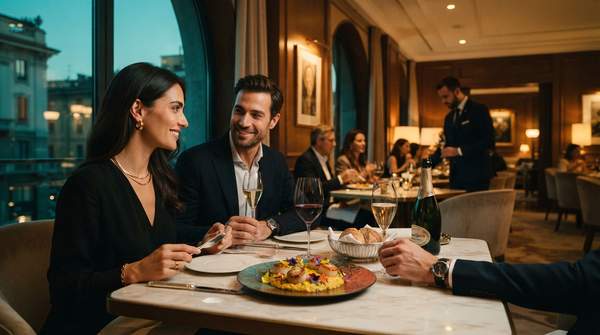
For discerning travelers, a luxury hotel stay is often defined as much by its culinary offerings as by its comfort and service. The finest establishments elevate dining into an integral part of the travel experience, transforming meals into memorable events. This article delves into the distinct gastronomic identities of two prominent luxury hotels—The Carlton Milan and Aleph Rome Hotel—comparing their signature restaurants, executive chefs, and unique food-related amenities. We will also provide a practical framework for evaluating culinary excellence, helping you choose a hotel that truly satisfies your palate.
The Carlton Milan: A Taste of Italian Elegance
The Carlton Milan, a Rocco Forte Hotel, reopened in November 2025 following an extensive five-year, €60-million renovation, as reported by Hotel Designs in September 2026. This grand dame now features 71 suites and rooms, two restaurants, a bar, and a spa, situated on Via della Spiga, a renowned luxury shopping street.
The hotel's food and beverage program is overseen by Fulvio Pierangelini, Rocco Forte Hotels' creative director of food, whose culinary philosophy emphasizes refined simplicity and seasonal ingredients. The Carlton Milan offers two distinct dining experiences:
* Spiga: This is the hotel's more formal signature restaurant, presenting a refined take on Italian cuisine.
* Café Floretta: Described as a charming, informal space drenched in natural light with a greenhouse-inspired winter garden feel, Café Floretta provides an all-day dining concept. Its breakfast buffet is particularly noted for its generous selection of fresh pastries, breads, cereals, cold cuts, cheeses, fruits, and nuts, alongside an à la carte menu featuring dishes like omelette carbonara or sausage with creamy polenta.
The hotel's design, food, and service are said to reflect the high standards typically expected from a Rocco Forte hotel, with its restaurants, bar, and spa offering ample reason to linger, according to the Hotel Designs review.Aleph Rome Hotel: Contemporary Roman Flavors
The Aleph Rome Hotel, a Curio Collection by Hilton property, occupies a former 1930s bank building on a quiet street near Via Veneto in Rome. Acquired by Al Rayyan Tourism Investment Company (ARTIC) in 2015, the hotel has undergone substantial renovation and restoration work, as noted by Premier Construction News in 2017. The hotel features 80 rooms and suites, a heated rooftop pool overlooking the city, and a spa located in the old bank vault, according to a September 2026 review by The Luxury Editor.
The culinary offerings at Aleph Rome Hotel are diverse and include:
* Sky Restaurant (also known as Sky Blu restaurant): Located on the rooftop, this restaurant offers panoramic city views and is led by Executive Chef Carmine Buonanno. It specializes in contemporary, seasonal Italian cuisine with Roman roots, featuring a creative reinterpretation of local ingredients.
* Restaurant 1930s: This dining option serves traditional Italian cuisine, with elements of the hotel's former years as a bank found throughout its design. It also offers creative local dishes, including a lunch buffet, as reported by Premier Construction News.
Beyond its main restaurants, the Aleph Rome Hotel provides several unique culinary amenities and experiences. Guests can enjoy an Onyx cocktail bar and Rome's only Cognac & Cigar Lounge, which also offers cocktail master classes and introductions to cigars, according to Historic Hotels Worldwide. The hotel also hosts special events like evening pool parties, as mentioned by Historic Hotels Worldwide.Comparative Culinary Excellence: Milan vs. Rome
When choosing between The Carlton Milan and Aleph Rome Hotel for a dining-focused stay, discerning travelers will find distinct approaches to luxury gastronomy. The following comparison highlights their key culinary features:
Comparative Culinary Offerings of The Carlton Milan and Aleph Rome Hotel
| Hotel Name |
Signature Restaurants |
Cuisine Style |
Executive Chef / Culinary Leadership |
Unique Culinary Amenities |
| The Carlton Milan |
Spiga (signature), Café Floretta (all-day dining) |
Refined Italian cuisine (Spiga); All-day dining, impressive breakfast buffet (Café Floretta) |
Fulvio Pierangelini (Rocco Forte Hotels' creative director of food) |
Emphasis on refined simplicity and seasonal ingredients across all F&B offerings. |
| Aleph Rome Hotel |
Sky Restaurant (rooftop), Restaurant 1930s |
Contemporary, seasonal Italian with Roman roots (Sky Restaurant); Traditional Italian cuisine (Restaurant 1930s) |
Carmine Buonanno (Executive Chef for Sky Restaurant) |
Rooftop dining with panoramic city views, Cognac & Cigar Lounge, cocktail master classes, cigar introductions. |
The Carlton Milan, under the guidance of Fulvio Pierangelini, focuses on a broad, refined Italian culinary experience across its venues, with a notable emphasis on a high-quality breakfast. Aleph Rome Hotel, on the other hand, offers a more specialized Roman-rooted contemporary Italian cuisine at its rooftop Sky Restaurant, complemented by traditional Italian fare and unique lounge experiences like its Cognac & Cigar Lounge. While The Carlton Milan's culinary leadership is a group-level creative director, Aleph Rome Hotel highlights its Executive Chef Carmine Buonanno for its rooftop dining.Framework for Evaluating Gastronomic Excellence in Luxury Hotels
For affluent travelers seeking to evaluate culinary excellence in luxury hotels, a structured approach can help ensure a truly satisfying experience. Drawing from the examples of The Carlton Milan and Aleph Rome Hotel, and general advice on gourmet travel, consider these key factors:
1. Chef Reputation and Philosophy: Investigate the executive chef or culinary director. Do they have a renowned background or a clear, compelling culinary philosophy, like Fulvio Pierangelini's focus on "refined simplicity and seasonal ingredients" at The Carlton Milan? A strong culinary leader often signals a commitment to quality.
2. Signature Cuisine and Focus: Understand the specific cuisine style offered by the hotel's main restaurants. Is it a refined take on local traditions, like Spiga's Italian cuisine, or a contemporary reinterpretation with local roots, such as Aleph Rome Hotel's Sky Restaurant? Look for a clear culinary identity that aligns with your preferences.
3. Unique Dining Experiences and Amenities: Beyond the main restaurants, what special offerings enhance the gastronomic journey? This could include rooftop dining with panoramic views, as seen at Aleph Rome Hotel's Sky Restaurant, or specialized lounges like its Cognac & Cigar Lounge offering master classes. Other examples might include wine pairings, tasting menus, or chef's table experiences, as highlighted by Trip.com when discussing gourmet hotels in France.
4. Quality of All-Day Dining and Breakfast: While dinner often takes center stage, the quality of all-day dining and breakfast can significantly impact your stay. A strong hotel breakfast, like the impressive buffet at The Carlton Milan's Café Floretta, can set a positive tone for the day, as noted by PrivateUpgrades in its guide to Rome dining.
5. Integration with Local Culture: Does the hotel's culinary program genuinely reflect and utilize local flavors and ingredients? Both The Carlton Milan and Aleph Rome Hotel emphasize Italian cuisine, with the latter specifically highlighting "Roman roots" and local ingredients. This connection to the destination enhances the authenticity of the dining experience.
6. Ambiance and Setting: Consider the atmosphere of the dining spaces. Does the hotel offer diverse settings, from formal to informal, or unique environments like a greenhouse-inspired winter garden (Café Floretta) or a rooftop with city views (Sky Restaurant)? The setting contributes significantly to the overall dining experience.
By applying this framework, travelers can move beyond a simple list of hotels to make informed decisions, ensuring their chosen luxury accommodation delivers an exceptional and memorable culinary journey.