The bento box began as dried rice carried in a cloth bag by travelers, hunters, and soldiers, and it became, over roughly fifteen centuries, an elaborately designed meal eaten at theaters, sold at train stations as a badge of regional pride, and sculpted into Hello Kitty characters for schoolchildren. What changed was rarely the food itself; what changed was Japan. Each era of the bento's history mirrors a societal shift—war, peace, railways, and pop culture—and tracing that lineage reveals why this humble packed lunch became one of the country's most recognizable cultural artifacts.
Ancient Origins: The Practical Beginnings of Portable Meals
People in Japan began preparing meals to eat away from home around the fifth century, according to the historical account presented by Web Japan. The key invention was hoshii: rice that was boiled and then dried, a preserved food that could be rehydrated in cold or boiling water when it was time to eat—or simply eaten as it was. Families prepared hoshiii and onigiri rice balls at home so they could be eaten while hunting, farming, or waging war.
The early record is surprisingly vivid. Japan's oldest historical chronicle, the Nihon Shoki of 720 A.D., describes falconers repurposing their falcon's feedbags as bento bags when they went out hawking, and the tenth-century Tales of Ise depicts people eating hoshii during their travels. As the food writer Aurélie Auger notes, hoshi-ii was packed in simple cloth bags or unvarnished wooden or bamboo boxes and carried on military campaigns, pilgrimages, and outdoor work—designed not to be beautiful, but to be practical, nutritious, and easily transportable.
Feudal Japan: Bento for Warriors and Travelers
The Kamakura period (1185–1333) is when the portable meal became a recognized fixture of daily life. Writing for Food Republic, Adam Raphael describes a time of conflict in which the bento is believed to have begun as a way to pack portable meals for warriors—boiled-and-dried rice that could be re-boiled on the road and, because it was dry, saved for use at any moment. Japan House Los Angeles similarly identifies hoshi-ii, literally "dried meal," as the traveler's staple of the era: lightweight, long-lasting, and preparable anywhere.
The word itself arrived around this time. Raphael points out that "bento" is actually Chinese—the slang term biàndāng, meaning "convenience," made its way to Japan and the name stuck. The term's popularization is often credited later, to the sixteenth-century military commander Oda Nobunaga, who fed large numbers of people at his castle by handing out simple individual meals; Web Japan reports that the word "bento" was coined to describe food distributed in this manner, a credit the tableware specialist Katachiware also attributes to him.
The Edo Period: From Necessity to Artistry and Leisure
With the Edo period (1603–1868) came peace and prosperity, and the bento transformed accordingly—from a field ration into an accessory for leisure. Web Japan notes that people considered bento an essential accompaniment to outdoor excursions and the theater. The signature form was the makunouchi bento, whose name literally means "while the curtain is closed," originally referring to meals eaten between acts of plays.
Katachiware describes the era's lacquered wooden boxes as luxury items for the upper class, elaborately prepared for tea ceremonies, theater intermissions, entertaining, and hanami cherry-blossom viewing parties. These layered jubako boxes came equipped with small dishes, chopsticks, tiny sake cups, and napkins. The bento had crossed a cultural threshold: it was no longer only about eating away from home, but about eating beautifully.
Meiji Era and Beyond: Industrialization and the Rise of Ekiben
Railways changed everything again. When railroads spread across Japan during the Meiji period (1868–1912), a new form appeared: the ekiben, or station bento. Web Japan reports that the first ekiben—rice balls with pickled apricots inside—was reportedly sold in 1885 at Utsunomiya Station in Tochigi Prefecture.
Auger describes that first vendor's offering as white rice with takuan pickled radish and an umeboshi salted plum in a woven bamboo box—simple, practical, and portable. The idea spread quickly to every region, and because major stations often sat in areas with strong culinary identities, each began offering its own bento prepared by local caterers. Ekiben became, in her phrase, regional culinary ambassadors, showcasing local products and the creativity of local chefs. The bento now carried not just a meal but a place's identity.
Modern Bento: Kyaraben and Global Cultural Impact
Today the bento has split into distinct branches. Ekiben remain a showcase of regional invention: Japan House Los Angeles cites Toyama Prefecture's masu no sushi, fatty trout pressed over rice in a square cedar box wrapped in bamboo leaves, and Mie Prefecture's "Moo Taro Bento," which serves wagyu beef in a cow-shaped container that plays the folk song "Furusato" when opened.
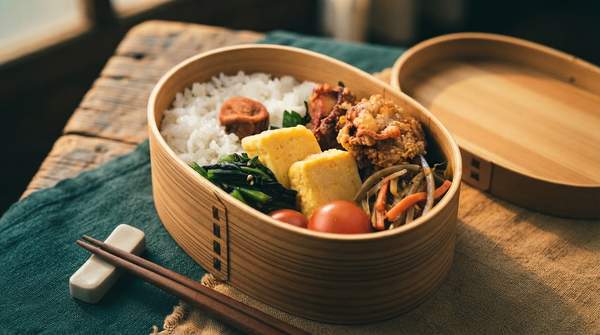
The other modern branch is kyaraben, "character bento," visible in any Japanese elementary school at lunchtime—elaborate creations that transform rice balls and other items into pop-culture characters from Hello Kitty to Totoro. Meanwhile, as Raphael observes, the richly adorned boxes of the Edo period have fallen somewhat out of fashion, with everyday bento now typically made of metal, plastic, or glass, emphasizing durability and convenience. The artistry has migrated from the container to the arrangement itself.
The Bento Box Through the Ages: A Historical Timeline
Read across the centuries, the timeline below shows a consistent pattern: each new form of bento answered a new social condition, while the core purpose—convenient, transportable, aesthetically considered food—never changed.
| Historical Period | Bento Form/Name | Key Characteristics & Use | Cultural Significance |
|---|---|---|---|
| Ancient Japan (~5th century – Heian) | Hoshii (dried boiled rice) | Dried rice rehydrated in water or eaten as-is; carried in cloth bags or plain wooden boxes while hunting, farming, or at war; falconers used feedbags, per the Nihon Shoki (720 A.D.) | Pure practicality: sustenance for work and travel, with early literary depictions in the 10th-century Tales of Ise |
| Kamakura Period (1185–1333) | Hoshi-ii | Boiled-and-dried rice, re-boilable on the go; the Chinese slang term biàndāng ("convenience") entered Japanese around this time | Portable meals popularized amid conflict, especially for warriors on the road |
| Azuchi-Momoyama Period (1568–1600) | Bento (named) | The term "bento" is credited to Oda Nobunaga for individually distributed meals at his castle; lacquered wooden boxes emerged as upper-class luxury items | The meal acquired a name and an emerging aesthetic |
| Edo Period (1603–1868) | Makunouchi bento | Elaborate layered jubako boxes with dishes, chopsticks, sake cups, and napkins; eaten at theaters, hanami, and tea ceremonies | Peace turned the bento from necessity into an accessory for leisure and entertainment |
| Meiji Era (1868–1912) | Ekiben (station bento) | First sold reportedly in 1885 at Utsunomiya Station—rice balls with pickled apricots—then spread to stations nationwide with local specialties | Railways tied the bento to travel and regional identity, making it a culinary ambassador |
| Modern Era (20th century – present) | Kyaraben and everyday bento | Character bento sculpting rice into pop-culture figures for schoolchildren; everyday boxes now favor metal, plastic, or glass for durability | Artistry shifted to the arrangement, reflecting pop culture and daily convenience |
The Enduring Appeal of the Bento: A Reflection of Japanese Culture
The bento box serves as a dynamic cultural artifact, continuously adapting to societal changes while retaining its core purpose of providing convenient, aesthetically pleasing, and culturally significant meals. That is the real lesson of the timeline: the same object that sustained samurai on campaign became a theater intermission snack, a region's calling card, and a parent's canvas for a Totoro-shaped lunch. The measurable indicator of its continued vitality is the ongoing evolution in bento forms, ingredients, and presentation in response to new social trends, technological advancements, and artistic expressions—watch for new ekiben varieties at regional stations and new character designs in school lunchboxes, and you will see the tradition still writing its next chapter.
Sources
- The History of Bento | Kids Web Japan
- Bento: The History of a Japanese Takeout Cuisine — iRASSHAi
- The 12th Century Origins Of The Bento Box, One Of Japan's Traditional Lunches - Food Republic
- Thinking Inside the Box — JAPAN HOUSE Los Angeles
- In Japan During The Kamakura Period Bento Box History Begins — Katachiware