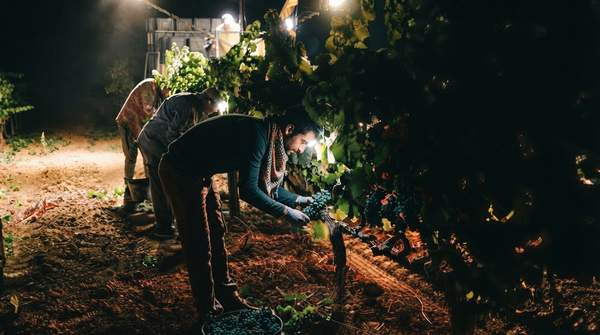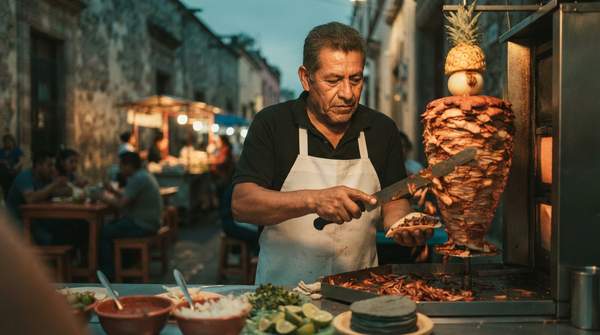
The Mediterranean diet did not begin as a nutrition plan, and it was never really a single "diet" at all. In its earliest form, as the physician Antonio Capurso recounts in his historical perspective for Aging Clinical and Experimental Research, it was the everyday fare of populations living along the Mediterranean coast, built around a "bread-olive oil-wine" triad and rounded out with legumes and cheeses made from the milk of lean sheep and goats. Everything else—the vegetables, the research studies, the UNESCO inscription—came later, layered over centuries of conquest, exchange, and reinvention.
The Ancient Roots: Bread, Olive Oil, and Wine
When I first started tracing this story, what struck me most was how compact the original core was. Capurso is explicit on this point: the original Mediterranean diet rested on three pillars—bread, olive oil, and wine—because the Mediterranean coast was a place "where olive trees and vignards grew spontaneously from time immemorial" and where olive oil served as the main fat component. That is not incidental. The geography and climate of the basin made this triad the path of least resistance for ancient eaters, and the diet grew out of what the land offered rather than out of any theory.
The olive carried meaning far beyond the table. As a review of the diet's food culture in the published literature notes, the city-state of Athens depicted an olive tree as its symbol, and the ancient Greeks left the olive branch to humankind as a representation of peace. When Alexander the Great conquered territory in the Near East in the 4th century BC, Greek food influences traveled with him. So even at this early stage, the diet was already in motion—carried by armies, traders, and settlers rather than fixed in place.
Alongside the triad came the humbler staples that made it a working cuisine for ordinary people: legumes and cheeses produced with the milk of lean sheep and goats. Capurso frames these as "essential elements" that were "subsequently added at later dates," which is a useful reminder that even the founding version of the diet was an accumulation rather than a starting point handed down fully formed.
Evolution Through Conquest and Exchange
Here is where the story complicates the popular image of a timeless, unchanging peasant table. The same review that describes the olive's ancient symbolism also emphasizes that the Mediterranean diet, as a plant-based diet, "received sequential influences, as successive vegetal species were imported from other geographical regions of the world and acclimatized in the Mediterranean Basin." In other words, many of the foods we now think of as quintessentially Mediterranean arrived from elsewhere and only became "traditional" after centuries of local adoption.
Every wave of political and cultural change left its mark on what people ate. The diet absorbed habits brought by successive conquerors and settlers across the basin, and each imported plant species that took root in Mediterranean soil eventually found its way into local fields, markets, and recipes. What emerged was not a preservation of some pure original but a continuous process of borrowing and adaptation.
This is the part I find most worth dwelling on, because it reframes the whole question of authenticity. A tradition that has spent more than two millennia importing, acclimatizing, and localizing foreign species was never defined by a fixed ingredient list. Its defining feature was adaptability itself—the willingness of Mediterranean communities to fold whatever the world brought them into their own culinary grammar.
The Modern 'Discovery' and Health Focus
The diet's modern chapter began not in a kitchen but in a research setting, and it started with an observation rather than a theory. According to the account preserved by Oldways, a nonprofit focused on cultural food traditions, extensive research found that residents of Crete topped the health charts of the studied populations. Even after the deprivations of World War II—and perhaps in part because of them—the cardiovascular health of Crete residents exceeded that of U.S. residents, and researchers attributed much of that difference to diet.
Out of that work, as the Oldways account puts it, came an understanding that certain Mediterranean-eating patterns "were remarkably connected with good health," and from that conclusion emerged the modern concept of a "Mediterranean Diet" that could promote lifelong good health. Notice the sequence: the way of eating existed for millennia; the name and the health framing are 20th-century artifacts.
The concept then needed institutional champions. Oldways, together with nutrition scientists who objected to the low-fat orthodoxy of the early 1990s—advice they believed was "doomed to increase obesity and the incidence of other chronic diseases such as heart disease, diabetes, and cancer"—convened the 1993 International Conference on the Diets of the Mediterranean. That gathering brought nutrition scientists, public policy experts, chefs, and food writers together to offer a research-backed alternative, and it marks the moment the diet was consciously repackaged as a global health and lifestyle model.
The Mediterranean Diet: A Historical Timeline
To see the whole arc at a glance, I have organized the milestones from the evidence into a single chronology. What it shows is a diet that began as a geographic accident, absorbed the world through exchange, was renamed by researchers, and was finally recognized as cultural heritage.
| Era / Date | Key Development | Core Foods / Practices |
|---|---|---|
| Ancient Greco-Roman era | Foundational dietary regimen of coastal Mediterranean populations; olive tree symbolized Athens; Greek food influences spread through Alexander the Great's 4th-century BC conquests in the Near East | The "bread-olive oil-wine" triad, with olive oil as the main fat; later integrated with legumes and cheeses from lean sheep and goat milk |
| Following centuries | Sequential importation and acclimatization of successive vegetal species from other regions into the Mediterranean Basin | A progressively enriched plant-based diet, shaped by each wave of imported species |
| Mid-20th century | Researchers observe the cardiovascular health of Crete residents exceeding that of U.S. residents, even after World War II, attributing much of the difference to diet | Traditional Cretan eating patterns identified as connected with good health |
| 1993 | The International Conference on the Diets of the Mediterranean frames the diet as a research-backed alternative to prevailing low-fat guidance | Mediterranean eating patterns promoted as a health-conscious lifestyle model |
| 2010 | UNESCO inscribes the Mediterranean diet on its Intangible Cultural Heritage list | The diet recognized as social practices, knowledge, and craftsmanship—not just food |
| Established by General Assembly resolution A/RES/80/174 | 16 November designated as the International Day of the Mediterranean Diet, recognizing the diet's importance to local communities, economies, smallholders and family farmers, and sustainable agriculture | Celebration of cooking with pulses, whole grains, fish, seasonal vegetables and olive oil |
Beyond Food: UNESCO Intangible Cultural Heritage
The 2010 inscription changed the terms of the conversation. UNESCO's own description makes clear that what was recognized extends well beyond a plate of food: the heritage includes the craftsmanship and production of traditional receptacles used for the transport, preservation, and consumption of food—ceramic plates and glasses among them. The diet, in this framing, is a whole material and social culture.
People carry that culture, not cookbooks. UNESCO's account highlights that women play an important role in transmitting knowledge of the Mediterranean diet: they safeguard its techniques, respect seasonal rhythms and festive events, and pass its values on to new generations. Markets, too, are described as key spaces where the diet is cultivated and transmitted through the daily practice of exchange, agreement, and mutual respect. The word UNESCO reaches for is essentially one of relationship—food as the thread connecting landscape, season, community, and table.
That is also why the United Nations describes the diet as best discovered in the kitchen, drawing on recipes collected from cooks and chefs around the world that put its principles into practice through pulses, whole grains, fish, seasonal vegetables, and olive oil. The General Assembly's resolution designating 16 November as the International Day of the Mediterranean Diet explicitly ties the diet's importance to local communities, economies, micro-, small and medium-sized enterprises, smallholders, and family farmers—framing it as an engine of social cohesion in the region, not merely a set of nutrients.
Appreciating the Mediterranean Diet's Enduring Legacy
The decision I would encourage you to make is this: recognize the Mediterranean diet as a living cultural heritage, not just a dietary trend, by understanding its deep historical roots and evolving social practices. That recognition has practical consequences for how you read about it. A diet that began with a bread-olive oil-wine triad, absorbed the world's plants one species at a time, was renamed by mid-century researchers, and was inscribed by UNESCO in 2010 cannot be reduced to either a fad or a frozen recipe.
The measure of whether this understanding has taken hold is a concrete one: increased appreciation for the cultural context of food choices and engagement with traditional food practices. That could mean cooking a recipe at home on the International Day each 16 November, seeking out seasonal ingredients, or simply noticing, the next time a headline sells you the diet as a modern invention, how many centuries of exchange stand behind that plate.
Sources
- The Mediterranean diet: a historical perspective - Aging Clinical and Experimental Research — SpringerLink
- The Mediterranean Diet: From an Environment-Driven Food Culture to an Emerging Medical Prescription - PMC
- Mediterranean Diet Background - OLDWAYS - Cultural Food Traditions
- Mediterranean diet - UNESCO Intangible Cultural Heritage — ICH
- International Day of the Mediterranean Diet — United Nations