The sommelier profession was formally established in the mid-to-late 20th century, when the first Master Sommelier examination was held in London in 1969 and the Court of Master Sommeliers was founded in 1977. Before those dates, wine service carried few recognized standards or certifications; expertise rested with individuals who happened to have a passion for wine, as the Court of Master Sommeliers Americas recounts of the era before the mid-20th century. The centuries before that tell a stranger story: the sommelier began not as a wine expert at all, but as something closer to a herdsman in charge of pack animals.
From Beast of Burden to Royal Steward: Early Origins of the Sommelier
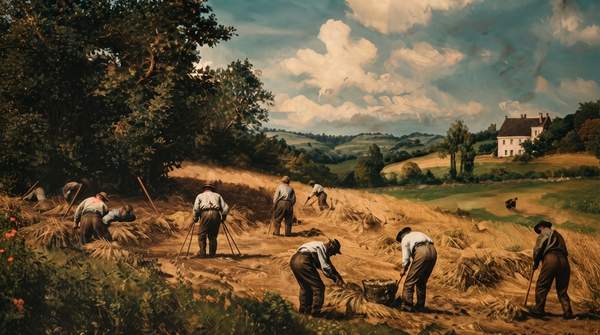
The word itself is the first clue. According to the San Francisco Wine School's account of the profession's origins, "sommelier" may stem from the old French words "sommerier," "somier," and "bête de somme" — the last meaning "beast of burden," with the sommelier as its herdsman. The exact Latin root is debated, but the connection to beasts of burden is consistent across the historical accounts. A sommelier, in other words, was originally defined by transport, not taste.
The role then climbed the social ladder. By 1316, the term referred to the official responsible for transporting the French royalty's baggage when they traveled, and under Louis XIV the sommelier remained the official in charge of baggage when the court moved. Augusta Vin's history describes the same specialization: sommerier evolved into sommelier, and the position became responsible for French royalty's baggage during travel.
Within aristocratic households, the duties expanded well beyond luggage. In the homes of lords, sommeliers chose the wines, desserts, and table settings, and used their tastevin — the shallow silver tasting cup — to test the lord's wine and food for poison. In medieval homes, sommeliers functioned much like butlers, a far cry from the figure we recognize today. A Middle French reference cited in the profession's general history likewise describes a court official charged with transportation of supplies, from an era when pack animals carried the goods.
England developed its own institutional thread, one that would matter centuries later. According to the Court of Master Sommeliers Europe's history, the Worshipful Company of Vintners was one of the Twelve Great City of London Livery Companies, guilds whose members took care of each other before government support programs existed. Established to help wine import, regulation, and sales, the Vintners ran the English wine trade for hundreds of years until a series of deregulations stripped them of their power and weakened the organization — though the company continued to play an essential part in the world of wine.
The Emergence of Wine Service in Public Dining
The next transformation moved the sommelier out of private households and into public dining rooms. As fine dining grew in popularity and importance, the restaurant position demanded some form of shared guidelines — not a law degree, as VinePair's history puts it, but a curriculum of sorts to define what the job actually was and to get people on board with how fine dining works.
The clearest marker of that shift came in 1907, when the Union of French Sommeliers was formed. The organization went through several iterations and merged with other bodies over time, but its founding signaled that the role had outgrown the manor house: restaurants now needed a defined wine position of their own.
The demands on the role kept widening. Familia Torres, writing on the profession's origins and future, notes that restaurants came to be judged on the quality of their wine lists and the service shown to the customer, which drove the increasing professionalization of the sommelier. The growing number of schools specializing in the field and the widening range of professional tasks revealed the hotel and wine industry's interest in developing the profession. A good sommelier, on this account, needed to be versed not only in wine but in other beverages and gastronomy as well. The modern scope can extend across beers, spirits, cocktails, mineral waters, and even tobaccos, with the maître d'hôtel covering the role when no sommelier is employed.
Timeline: The Sommelier's Journey Through History
Read sequentially, the profession's history falls into distinct eras, each defined by a different primary role. The table below traces that progression — from pack-animal tender, to household official, to organized restaurant professional, to certified expert.
| Era / Date | Key Development | Primary Role |
|---|---|---|
| Medieval era | Word derives from old French "sommerier" / "bête de somme"; exact Latin root debated | Herdsmen in charge of beasts of burden |
| 1316 onward | Term applied to officials transporting French royalty's baggage, including under Louis XIV | Royal supply and baggage manager |
| Pre-18th century households | Sommeliers in lords' homes chose wines, desserts, table settings; tested for poison with the tastevin | Household steward, much like a butler |
| 1363 | Worshipful Company of Vintners among the Twelve Great City of London Livery Companies; ran the wine trade until deregulations weakened it | Guild-based wine trade regulation |
| 1907 | Union of French Sommeliers formed; later iterations and mergers | Organized restaurant wine professional |
| 1969 | First Master Sommelier examination held in London, proctored by the Institute of Masters of Wine and other trade members | Certification-era sommelier begins |
| 1977 | Court of Master Sommeliers formed under Cyril Ware as first Chairman | Internationally recognized certified professional |
| 1987 | Court of Master Sommeliers Americas created; first exam held in Monterey, California | Global professional structure |
The pattern across the rows is one of steadily narrowing and deepening scope: responsibility for everything transported, then for the table itself, then for wine alone — and finally, a formal credential attached to that expertise.
The Birth of a Profession: 20th-Century Formalization
What happened in 1969 was not spontaneous. According to the Court of Master Sommeliers Europe, the Vintners Company, the Institute of Masters of Wine, the British Hotels & Restaurants Association, the Wine & Spirit Association of Great Britain, and the Wholesale Tobacco Trade Association all shared a problem: none had a service component, yet all needed knowledgeable service industry members to sell and serve their products correctly. To sell high-quality wine, they wanted a highly educated service industry — and the country had lacked a large professional service class since the war. So the organizations gathered in 1969 and created an examination at Vintners' Hall in London, designed to encourage sommeliers to become credible professionals.
It worked. The Master Sommelier Diploma was created, and Cyril Ware, Danny Lydon, and George Clarke were the first to pass. The Court of Master Sommeliers Americas' own history confirms the date and setting: the first-ever Master Sommelier examination was held in London in 1969, proctored by the Institute of Masters of Wine and other esteemed members of the trade. That exam was the precursor to the formal organization that followed.
The Court itself came in 1977, formed on the actions of Brian Julyan, who rallied other Master Sommeliers to create an official organization, with Cyril Ware as its first Chairman. By then, the Court had become internationally recognized. The diploma was then scaffolded by earlier levels — the Advanced (level 3) came first as a lead-up, then an Introductory (level 1), and finally a Certified (level 2) — building the tiered certification structure that defines the profession today. In 1987 the Court of Master Sommeliers Americas was created, holding its first examination in Monterey, California, and carrying the credential across the Atlantic.
The Enduring Legacy of Professionalization
The formal establishment of the Master Sommelier diploma and the Court of Master Sommeliers transformed wine service from an informal role into a globally recognized, certified profession, setting a benchmark for expertise and service standards. That is the decisive boundary for any reader tracing the profession's history: before 1969, a sommelier's authority was personal and informal; after 1977, it was institutional and examined.
The measurable indicator of this transformation is the consistent use of the Master Sommelier title as a standard for advanced wine knowledge and service in fine dining establishments. When you next see those initials after a sommelier's name on a restaurant's team page, you are looking at the direct legacy of a 1969 exam at Vintners' Hall — and of a word that once meant nothing more than the keeper of a beast of burden.
Sources
- About Master Sommeliers — The Court of Master Sommeliers Americas
- Origins of the Sommelier — San Francisco Wine School
- History of Sommeliers - Articles Augusta Vin - Fredericksburg TX Winery
- History of the Court of Master Sommeliers - Court of Master Sommeliers Europe
- Wine 101: The History of the Sommelier — VinePair