Why does a plate of orecchiette feel so utterly different from a bowl of Alpine pizzoccheri? The answer lies in the soil. Italy's pasta traditions were shaped by what each region could grow: durum wheat semolina in the sun-baked South, and hardy grains like buckwheat in the cold mountains near the Alps. Understanding those two doughs—semolina and water versus buckwheat and wheat flour—gives you a framework for every pasta you'll ever make or pair.
The Regional Divide: North vs. South in Italian Pasta
Travel down the Italian peninsula and the pasta itself changes. Food52's editors describe the shift plainly: as you move from northern to southern Italy, the tradition of fresh pasta transforms. In the north, dough is enriched and made elastic with eggs and most often filled—think ravioli, Emilia-Romagna's tortellini, Piedmont's agnolotti. In the south, the essential dough is durum wheat and water, shaped by hand into sturdy forms.
The geography explains the pantry. Durum wheat grows in central and southern Italy, where the climate suits it. The mountainous north, bordering Austria, Switzerland, and France, took a different path: as the culinary site Giadzy notes, these cool lands often relied on grains such as buckwheat and rye rather than plain wheat flour. Pasta, in other words, is agricultural history you can eat.
Southern Italy: The Semolina and Water Tradition
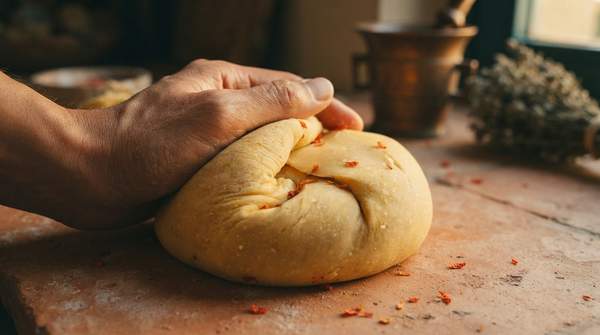
The southern dough is radical in its simplicity: semolina flour and water, no eggs. Eataly's regional guide explains why—the durum wheat flour that grows only in central and southern Italy is higher in protein, so eggs are usually unnecessary. A little water binds the golden semolina into a workable dough.
That dough becomes the South's iconic hand-shaped pastas. Food52 describes it as strong and sturdy—shaped into orecchiette or cavatelli in Puglia, or twirled around knitting needles into Sicilian busiate. InRome Cooking's guide adds trofie to the list of shapes suited to this dough. These are thick, robust forms, and Food52 notes they leave you feeling satiated with relatively little else.
The pairings follow the pasta: lighter, vegetable-forward sauces. Orecchiette classically meet broccoli rabe or simple tomato sauce—ingredients as southern as the wheat itself.
Northern Italy: The Hearty Buckwheat Dough of Lombardia
Cross the peninsula to Lombardia, near the Alps, and the dough changes character entirely. There you find pizzoccheri: short, fat ribbons whose name comes from the dialect word bizzo, meaning "morsel," according to Eataly's guide. The dough is buckwheat flour blended with wheat flour and water—no eggs, but a completely different grain profile from the South's durum.
Buckwheat gives pizzoccheri their distinctive character. Eataly notes the pasta sometimes has a coarse texture that is excellent for picking up sauces. And the traditional pairing is anything but light: potatoes, Savoy cabbage, butter, and local cheese—a hearty, cold-weather dish born of mountain winters, as far from a summer tomato sauce as pasta gets.
The Science of Texture: How Ingredients Shape Your Pasta
What's happening in these doughs? Flour provides the structure, and protein is the key variable. Semolina's higher protein content means it can form a strong network with water alone—hence no eggs needed in the South. The southern dough's strength is what allows it to be dragged, pressed, and shaped by hand into orecchiette and cavatelli without falling apart.
Buckwheat behaves differently. It brings a darker, earthier flavor and, as Eataly observes, a coarser texture in the finished pasta—and that coarseness is a feature, not a flaw: it grips rich, heavy sauces. Eggs, by contrast, play the northern fresh-pasta role Food52 describes: they enrich and add elasticity, which is why the egg doughs of the north lend themselves to thin sheets and delicate filled shapes. Three liquids and flours, three different structures—each engineered, by tradition, for its own sauces.
Regional Pasta Doughs: A Comparative Overview
The table below places the two traditions side by side, tracing how each ingredient choice flows into texture, shape, and sauce.
| Attribute | Southern Italy (Semolina Dough) | Northern Lombardia (Buckwheat Dough) |
|---|---|---|
| Primary Flour | Durum wheat semolina, which grows in central and southern Italy | Buckwheat flour blended with wheat flour |
| Liquid | Water only—semolina's high protein means eggs are usually not needed | Water |
| Resulting Texture | Strong, sturdy dough for robust shapes | Sometimes coarse texture, excellent for picking up sauces |
| Example Shape | Orecchiette and cavatelli (Puglia); trofie; Sicilian busiate | Pizzoccheri—short, fat ribbons named for the dialect word bizzo, "morsel" |
| Classic Pairing | Lighter sauces: broccoli rabe or simple tomato sauce | Potatoes, Savoy cabbage, butter, and local cheese |
Read across the rows and the logic emerges: the South's protein-rich semolina produces a strong, egg-free dough for thick, hand-shaped pasta paired with light vegetables; Lombardia's buckwheat produces a hearty, sauce-gripping ribbon built for butter, cabbage, and cheese. Same country, opposite instincts.
Elevating Your Pasta Making: Applying Regional Knowledge
Home cooks can enhance their pasta making and pairing skills by understanding the regional science and tradition behind different Italian pasta doughs. The practical test is concrete: the prepared pasta dish exhibits the expected texture characteristic of its regional dough type and is paired with a traditionally complementary sauce. If your cavatelli hold their shape under a light broccoli rabe sauce, or your pizzoccheri grab hold of butter and cheese, the tradition has done its job.