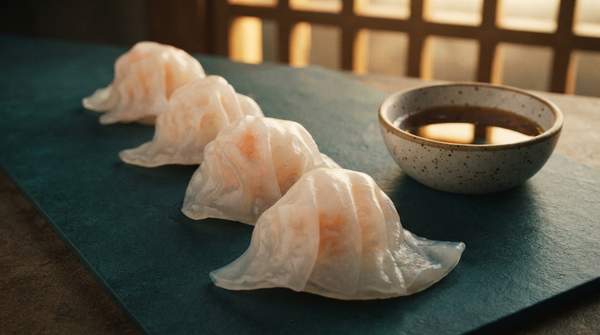
Here's the short answer: Northern Chinese jiaozi are crescent-folded dumplings with a sturdy wheat-flour wrapper, a hearty pork-and-vegetable filling, and they're boiled or pan-fried as an everyday staple. Cantonese har gow are steamed shrimp dumplings with a nearly transparent wrapper made from wheat starch and tapioca, served as an elegant dim sum delicacy. Once you see them side by side, you'll never confuse them again—and understanding why they differ tells you a great deal about how China eats.
Introduction to Chinese Dumplings: A World of Regional Flavors
Ask someone in Beijing what a dumpling is, and they'll likely picture something very different from what a diner in Guangzhou would. That's the quiet genius of Chinese cuisine: the word "dumpling" covers a family of foods that vary enormously by region, from soup-filled Shanghai buns to thin-skinned wontons in broth. Each style, as the food writers at Shanghai Taste put it, has "a distinct wrapper, filling, cooking method, and regional origin." I want to focus on the two most contrasting examples: the jiaozi of the northern provinces and the har gow of the Cantonese south.
Northern Chinese Jiaozi: The Hearty Staple
Jiaozi are built for substance. The wrapper starts as a dough rolled from wheat-based flours—thicker and rounder than a wonton skin—and gets folded into a crescent before cooking. The fillings lean hearty and homey: the recipe archive at China Sichuan Food lists pork, cabbage, chives, and shrimp as typical jiaozi ingredients, and the beauty of the format is that it welcomes whatever the household has on hand.
What really defines jiaozi, though, is their role. In the northern provinces, as the China Sichuan Food guide explains, dumplings are "the staple food all year around." For most Chinese cooks, the default is the boiled version—soft, juicy, and moist—while the pan-fried potsticker variation turns crispy and chewy and circulates nationwide mainly as street food or a side dish. And making them is its own occasion: wrapping dumplings together is described as one of the most important family activities for celebrating Chinese New Year in the north, with everyone contributing to the dish.
Cantonese Har Gow: The Delicate Dim Sum Star
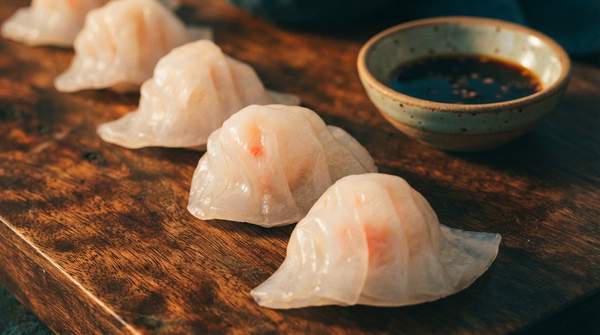
Har gow (虾饺) play an entirely different game. Their wrapper is made not from wheat flour but from a combination of wheat starch and tapioca, which turns translucent when steamed. The effect is theatrical: you can see the pink shrimp through the skin. The filling is precise rather than improvised—whole shrimp, often with bamboo shoots—and the cooking method is steaming, which preserves that glassy wrapper.
Craftsmanship is measured in pleats. According to the Shanghai Taste guide, a skilled har gow carries 7 to 10 pleats and a wrapper that is nearly transparent. Eaten with a dip of light soy or chili sauce, they are "the star of Cantonese dim sum"—a curated dining experience, not a plate you fill up on. Where jiaozi ask to be made by many hands at home, har gow ask to be admired in a bamboo steamer basket.
Jiaozi vs. Har Gow: A Culinary Comparison
Place the two side by side and the pattern becomes obvious. One is a wheat-wrapped, boiled-or-fried staple; the other is a translucent, steamed shrimp dumpling. Here is the full breakdown to use as your at-a-glance reference:
| Dimension | Northern Chinese Jiaozi | Cantonese Har Gow |
|---|---|---|
| Region | Northern China | Cantonese (Guangdong) |
| Typical Role | Staple food year-round; the most popular dish for Chinese New Year, often made together as a family | Star of Cantonese dim sum, served as a delicacy with dipping sauce |
| Wrapper | Thicker, round wheat-flour dough wrapper, crescent-folded | Translucent wrapper of wheat starch plus tapioca; nearly transparent when steamed, with 7–10 pleats |
| Filling | Typically pork, cabbage, chives, or shrimp—adaptable mixtures | Whole shrimp, often with bamboo shoots |
| Cooking Method | Boiled (soft and juicy) or pan-fried (crispy, chewy potstickers) | Steamed in baskets |
Notice how every row reinforces the others: the wheat wrapper tolerates boiling; the starch wrapper demands steam. The flexible filling suits a family table; the exacting shrimp filling suits a professional kitchen.
Regional Influence: How Culinary Roles Shape Dumpling Construction
This is the part I find most fascinating—each dumpling's job dictated its build. Jiaozi carry the weight of being daily sustenance in the north, so they're constructed to be filling, durable, and endlessly adaptable. A wheat dough wrapper survives a rolling boil; a hearty pork-and-cabbage filling satisfies as a meal. The family ritual that surrounds them—everyone folding together before a New Year feast—favors a forgiving, communal format.
Har gow answer a different question entirely: how do you turn a dumpling into a showpiece? Cantonese dim sum culture prizes precision and visual delicacy, so the wrapper was engineered from starches specifically to turn translucent, letting the shrimp's pink show through. Steaming keeps it glassy, and the pleat count becomes a benchmark of a maker's skill. A staple is made to nourish a household; a dim sum star is made to impress a table. Same broad category, opposite design briefs.
Understanding Regional Dumpling Identity
To accurately identify and appreciate Chinese dumplings, consider their wrapper, filling, and cooking method as key indicators of their regional origin and culinary role. A thicker wheat wrapper with a savory pork-and-vegetable filling, boiled or pan-fried, points north toward the jiaozi tradition of staple food and family celebration. A translucent starch wrapper stretched over whole shrimp, arriving steamed in a bamboo basket, points south toward Cantonese dim sum artistry. Note that this comparison deliberately sticks to these two representative styles—regional variations like Shanghai's soup dumplings or Sichuan's wontons follow their own logic.
The measurable proof that the distinction has clicked: the ability to correctly distinguish between a wheat-wrapped, boiled dumpling and a translucent, steamed shrimp dumpling based on visual and preparation cues alone. Next time a basket or a plate lands on your table, test yourself—look at the wrapper's opacity first, and the rest follows.
Sources
- Types of Chinese Dumplings: Wontons, Bao, Jiaozi & More — Shanghaitastemd
- How to Make Chinese Chive and Pork Dumplings (Jiaozi) — China Sichuan Food