Despite the endless stream of new recipes online, 70% of home cooks report feeling overwhelmed or unconfident when asked to improvise a meal without a precise guide, according to Home Cooking Survey 2023. The widespread reliance on rigid instructions, as evidenced by 70% of home cooks feeling overwhelmed or unconfident when asked to improvise a meal without a precise guide, suggests a gap in fundamental essential cooking techniques for home cooks, creating culinary insecurity rather than empowerment.
Home cooks have unprecedented access to recipes, yet many still lack the foundational skills to cook confidently and adaptably. The tension between unprecedented access to recipes and a lack of foundational skills creates a cycle where more recipes lead to more dependence, rather than fostering independence in the kitchen.
Relying solely on recipes limits culinary growth and enjoyment, suggesting that a return to mastering core techniques will empower a new generation of home cooks.
The Building Blocks of Better Cooking
Boiling, a simple technique for cooking food in rapidly bubbling water, is often used for pasta, vegetables, and eggs, according to the Betty Crocker Cookbook. This fundamental method, alongside others, forms the basis of all culinary understanding.
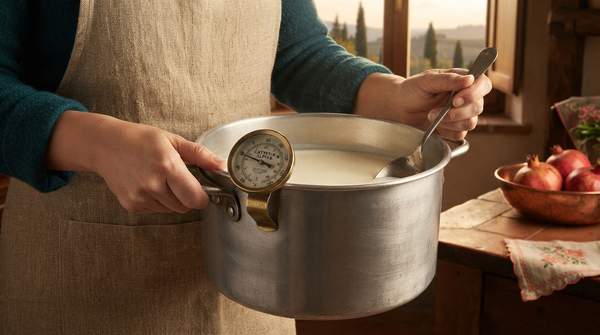
Simmering involves cooking food gently in liquid just below the boiling point, ideal for soups, stews, and sauces, as noted by Martha Stewart Living. Understanding heat control is paramount; different techniques require specific temperature ranges for optimal results, a principle highlighted by Alton Brown's Good Eats. Essential cooking techniques provide a comprehensive guide for beginners, offering foundational tips beyond individual recipes, as highlighted by Girl and the Kitchen. These basic methods are not just steps in a recipe, but the fundamental vocabulary that allows cooks to understand, execute, and adapt any dish.
Mastering Key Transformations: Sauté, Roast, Braise
Sautéing involves cooking food quickly in a small amount of fat over relatively high heat, ideal for tender vegetables and thin cuts of meat, as taught by the Culinary Institute of America. Sautéing exemplifies how direct heat transforms ingredients rapidly.
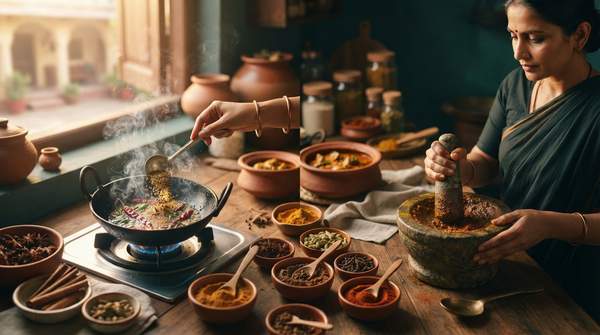
Roasting uses dry heat, typically in an oven, to cook food evenly and develop a rich, caramelized exterior, a method emphasized by America's Test Kitchen. Braising combines searing food at high heat with slow cooking in liquid, resulting in tender, flavorful dishes, especially for tougher cuts of meat, a technique popularized by Julia Child's Mastering the Art of French Cooking. The Maillard reaction, a chemical process responsible for the browning and complex flavors in many cooked foods, occurs at temperatures above 285°F, according to Science of Cooking, underpinning the effectiveness of these dry-heat methods. Mastering these distinct techniques allows a cook to transform ingredients through different heat applications, creating a wide range of textures and developing complex flavors.
Beyond the Heat: Prep, Flavor, and Texture
Knife skills, specifically the 'claw grip' and 'rocking motion,' are fundamental for safety and efficiency in food preparation, a core lesson from Gordon Ramsay MasterClass. These techniques extend beyond just heat application.
Deglazing involves adding liquid to a hot pan after cooking to dissolve browned bits (fond) from the bottom, creating flavorful sauces, a practice detailed in Larousse Gastronomique. Emulsification is the process of combining two liquids that don't naturally mix, like oil and vinegar, often with an emulsifier like egg yolk, explained by Harold McGee's On Food and Cooking. Whisking incorporates air into ingredients, creating volume and smooth textures, crucial for sauces, meringues, and batters, as demonstrated by Serious Eats. True culinary skill encompasses not just cooking methods, but also the preparatory and finishing techniques that build complexity and refinement into dishes.
The Payoff: Confidence, Efficiency, and Creativity
Seasoning properly, often in layers throughout the cooking process, is more effective than just at the end, a principle advocated by Samin Nosrat's Salt, Fat, Acid, Heat. Seasoning properly, often in layers throughout the cooking process, builds depth of flavor.
Mise en place, or 'everything in its place,' is a professional kitchen practice that organizes ingredients and tools before cooking, significantly improving efficiency, a concept formalized by Escoffier Online Culinary Academy. Learning basic techniques can reduce food waste by 15% as cooks become more adept at using various ingredients, according to the Sustainable Kitchen Report. Adopting these foundational practices leads to increased confidence, efficiency, and adaptability, making cooking a more rewarding, less wasteful, and ultimately more creative experience.
Common Questions & Quick Technique Fixes
How can I make meat more tender and flavorful?
Resting meat after cooking allows juices to redistribute, resulting in a more tender and flavorful product, according to Cook's Illustrated. Resting meat after cooking allows juices to redistribute, preventing them from escaping immediately upon slicing.
What is the most important tool for efficient cooking?
A sharp knife is safer and more efficient than a dull one, requiring less force and reducing the risk of slips, a principle emphasized by Victorinox Swiss Army. Keeping knives honed ensures precise cuts and faster preparation.
How can I preserve vegetables effectively for freezing?
Blanching vegetables before freezing helps preserve their color, flavor, and nutritional value, according to the National Center for Home Food Preservation. Blanching vegetables before freezing stops enzyme actions that cause spoilage.
Your Journey to Culinary Mastery Starts Here
By shifting focus from rigid recipe adherence to understanding and applying fundamental techniques, home cooks can unlock a lifetime of culinary confidence, creativity, and consistent delicious results. The 70% of home cooks overwhelmed by improvisation signals a critical market opportunity for platforms that prioritize foundational technique education over endless instruction, a conclusion supported by Home Cooking New York.
Policymakers should consider promoting basic culinary technique education as a public good, given its measurable impact on reducing food waste by 15%, positioning it as a practical tool for environmental stewardship. The current trend of recipe dependence, fueled by both online content and specialized gadgets, risks creating a generation of cooks proficient at following instructions but fundamentally unequipped to innovate or adapt, stifling true culinary creativity.
Educational platforms focusing on essential cooking techniques, such as those offered by Escoffier Online Culinary Academy, will likely see increased enrollment as home cooks seek true culinary independence.