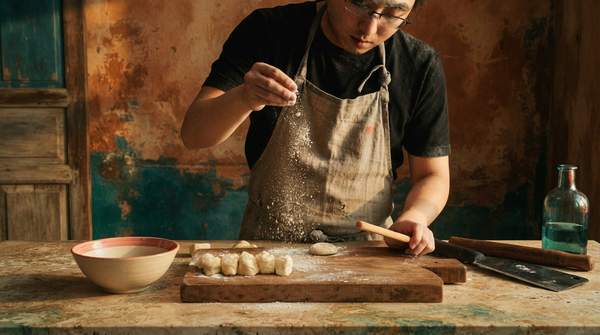
What actually separates a jiaozi from a wonton? The answer lies in four things: the wrapper, the filling, the cooking method, and where in China the dumpling comes from. Jiaozi are sturdy northern wheat-flour parcels, often boiled and eaten at Lunar New Year; wontons are their delicate southern cousins, swimming in broth; xiao long bao are Shanghai's famous "soup dumplings"; and tang yuan are the sweet, chewy spheres that anchor southern New Year celebrations. Here is how to tell them apart—and what each one tells you about the region that made it.
Jiaozi: Northern China's Staple
If you've ever enjoyed Italian tortellini or Russian pelmeni, jiaozi will look pleasantly familiar, as the food brand MìLà points out. But what sets these northern Chinese delights apart, in MìLà's telling, is the sheer variety of fillings they can carry. Shrimp, cucumber, cabbage, ground pork, vermicelli, and bean sprouts are just a few of the most popular options—and the list, as MìLà puts it, extends to "infinitely many more."
The wrapper is a simple, honest affair: wheat flour and water, rolled and folded by hand around a savory filling of ground meat and vegetables. That plainness is deceptive. Because the dough is sturdy, jiaozi are remarkably flexible in the kitchen—they can be boiled, steamed, or pan-fried, and boiling is the most common route. This is the dumpling most northern families mean when they say "dumplings," and it is the one most home cooks should master first precisely because it forgives beginner pleating.
The cultural weight matters as much as the cooking. As the South China Morning Post reported ahead of Lunar New Year 2026, in northern China jiaozi—made with a wheat-flour wrapper and savory fillings—is the essential festive food, with families gathering to make and eat them together on New Year's Eve. The act of folding them side by side is as much the point as eating them.
Wontons: Southern Comfort in Broth
Where jiaozi are robust, wontons are refined. According to the culinary guides published by the Auguste Escoffier School of Culinary Arts, wontons are "notably more tender and delicate due to their thin, square wrappers," which are crafted from wheat flour, water, and egg. That square shape and thinner dough are the fastest visual tells: a wonton wrapper is typically thinner than a jiaozi wrapper, and the filling inside is finely minced—usually shrimp and ground pork—so nothing fights the silky texture.
Cooking follows the delicacy. Wontons are typically gently boiled in chicken broth and served in that broth rather than drained, making the soup itself part of the dish. Escoffier's guide notes that regional flavors shine through in the variations: in Shanghai, you might find wontons stuffed with minced pork and bok choy in a savory soup, while in Sichuan they are folded into triangles and served with sesame paste and chili oil. Steamed or fried versions exist too, but the boiled wonton in clear broth remains the southern archetype.
Wontons are, in short, a distinct type of dumpling and a staple of southern Chinese cuisine—not a smaller jiaozi. If your goal is a light, brothy, weeknight-friendly dish, this is your starting point.
Northern vs. Southern Dumplings: A Cultural Divide
The north–south dumpling divide is one of the most charming fault lines in Chinese food culture, and it surfaces most vividly at Lunar New Year. As the South China Morning Post explained, dumplings are essential to most Chinese people during the festival and symbolize good fortune—but the type of dumpling, and its meaning, differs sharply by region. In the north, that means jiaozi: wheat-flour wrappers, savory fillings, and a family folding session on New Year's Eve.
In the south, the festive counterpart is tang yuan. Where jiaozi are savory and wheat-based, tang yuan are traditionally made from glutinous rice flour, giving them a soft, chewy, almost mochi-like texture, and they are often served sweet. The contrast is a small edible geography lesson: northern China's wheat-growing tradition shaped its dumpling culture, while the south's rice staples produced something altogether different for the same celebration.
The divide isn't a rivalry so much as a parallel tradition. Same festival, same wish for good fortune, two very different bowls. Understanding this split is the key to understanding why "Chinese dumplings" was never one dish to begin with.
Comparison of Essential Chinese Dumpling Styles
The table below contrasts the four styles across the same attributes—wrapper, filling, cooking method, and regional association—so you can identify each at a glance and choose based on texture, flavor, and cooking style.
| Dumpling | Wrapper | Typical Fillings | Primary Cooking Method | Regional Association |
|---|---|---|---|---|
| Jiaozi | Wheat flour and water dough | Ground meat (such as pork) and vegetables—cabbage, shrimp, cucumber, vermicelli, bean sprouts and more; the variety is a distinguishing feature | Boiled (most common), steamed, or pan-fried | Northern China; Lunar New Year symbol of good fortune, made by families on New Year's Eve |
| Wontons | Thin, square wheat-flour wrappers with egg; typically thinner than jiaozi wrappers | Finely minced shrimp and ground pork; regionally, pork and bok choy in Shanghai | Gently boiled in chicken broth and served in the broth; also steamed or fried | Southern Chinese cuisine, with Shanghai and Sichuan variations |
| Xiao Long Bao | Small, delicate wrapper that holds filling and soup together | Savory filling with hot soup inside—hence "soup dumplings" | Steamed | Believed to originate in the Jiangnan region; closely associated with Shanghai |
| Tang Yuan | Glutinous rice flour, giving a soft, chewy texture | Often sweet fillings | Boiled, typically served in liquid | Southern China; the Lunar New Year counterpart to northern jiaozi |
Read down the wrapper column and the logic of the whole category becomes clear: wheat flour in the north, thinner wheat-and-egg sheets or glutinous rice in the south. Read across any row and you get a complete cooking plan—what to wrap, what to put inside, and how to heat it.
Choosing Your Dumpling Adventure
So which one belongs in your kitchen? If you want a hands-on, fill-anything project with room for creativity, jiaozi's endlessly varied fillings and boil-steam-or-fry flexibility make it the natural first attempt. If you want something lighter and faster, wontons reward you with a delicate texture and a broth that does half the work of the meal.
Xiao long bao deserve their own mention here. These "soup dumplings," which the Institute of Culinary Education notes are believed to have originated in the Jiangnan region before becoming closely tied to Shanghai, are the most technically ambitious of the four. The soup inside is the whole point: by tradition, a gelatin-rich aspic is incorporated with the filling so that it melts into liquid during steaming, delivering broth inside the wrapper. It is a genuinely different preparation method from the other three—no boiling, no broth on the side, just steam doing the transformation.
Tang yuan, meanwhile, are the outlier: sweet where the others are savory, chewy where they are tender, and the southern answer to a northern question. Trying both in one New Year season is the fastest way to taste the regional divide yourself.
Making Your Choice: A Dumpling for Every Occasion
Home cooks can confidently choose a Chinese dumpling style to prepare or order based on their desired wrapper texture, filling preference, cooking method, and cultural context. Hearty and customizable points to jiaozi; brothy and delicate points to wontons; a dramatic, soup-filled centerpiece points to xiao long bao; and a sweet, chewy finale points to tang yuan.
The measurable indicator of success is simple: the reader can articulate the key differences between Jiaozi, Wontons, Xiao Long Bao, and Tang Yuan, and identify which type aligns with their culinary goals. If you can look at a menu—or a plate—and name the wrapper, the filling style, the cooking method, and the region behind it, you've got everything this guide set out to give you. Start with a pot of boiled jiaozi, and work your way toward the soup dumplings when you're ready for the challenge.
Sources
- Exploring Different Types of Chinese Dumplings and Bao — MìLà
- How people in northern and southern China enjoy dumplings for Lunar New Year — South China Morning Post
- Eight Types of Chinese Dumplings: A Brief Guide — Escoffier
- Types of Chinese Dumplings — ICE